Improve turf health and performance through football pitch aeration
In late autumn and winter, football pitches across the UK face their toughest test of the year. Continuous play leads to compacted soil, heavy rainfall to waterlogged sports surfaces and lower temperatures to a drop in the recovery rates of grass – significantly affecting turf health and playability.
For grounds teams, a well-planned maintenance programme – combining aeration, scarification, topdressing and soil monitoring – is key to ensure pitches stay resilient through the season and recover faster ahead of spring.
In this article, you’ll learn how strong, healthy roots are the foundations of a resilient pitch and that the right aeration equipment and a proactive approach to turf maintenance make all the difference.
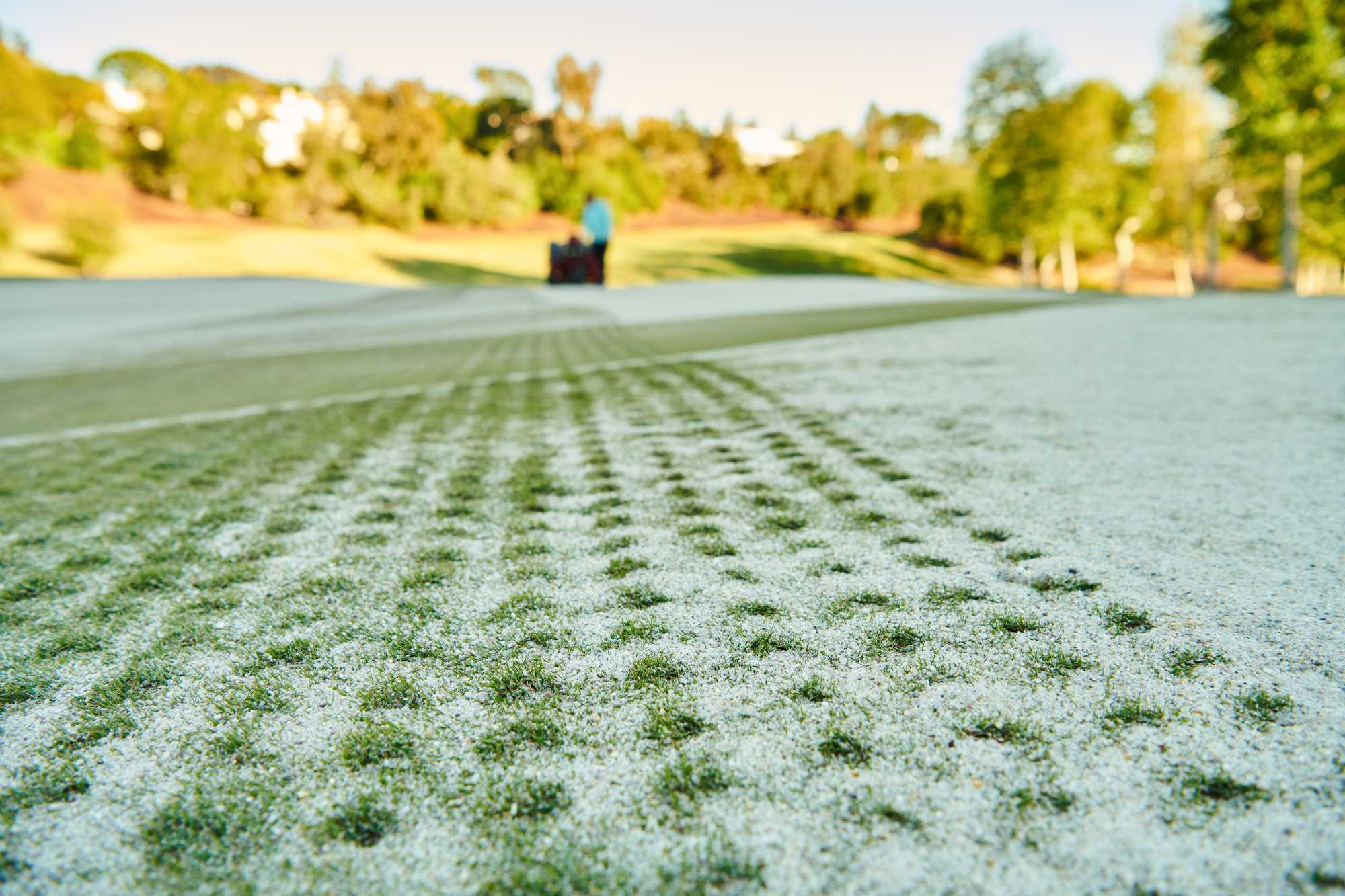
Aeration holes across a frosted sports turf surface help improve oxygen flow, drainage and overall pitch performance.
What is turf aeration?
Aeration is the process of punching holes into the soil surface through hollow or solid tines to allow air, water and other nutrients to penetrate the top layers and nourish the root zone.
Over time, play, foot traffic and machine use will cause soil particles to compact, reducing pore space and limiting air circulation. Without sufficient airflow, the roots weaken, drainage is affected and the playing surface loses its elasticity, leading to inconsistent bounce and poor playing conditions.
Why does it matter?
Regular aeration relieves this compaction, restores oxygen balance in the soil and promotes the microbial activity necessary for healthy root growth. In particular, football pitch aeration is essential to maintaining both ideal turf performance and player safety where the surface is more frequently damaged – especially around goalmouths, wings and central channels.
It’s also one of the simplest ways to extend your turf’s lifespan, reduce reliance on chemical fertilisers and support the long-term sustainability of your operations. For more insights into the benefits of aeration, explore our in-depth article.
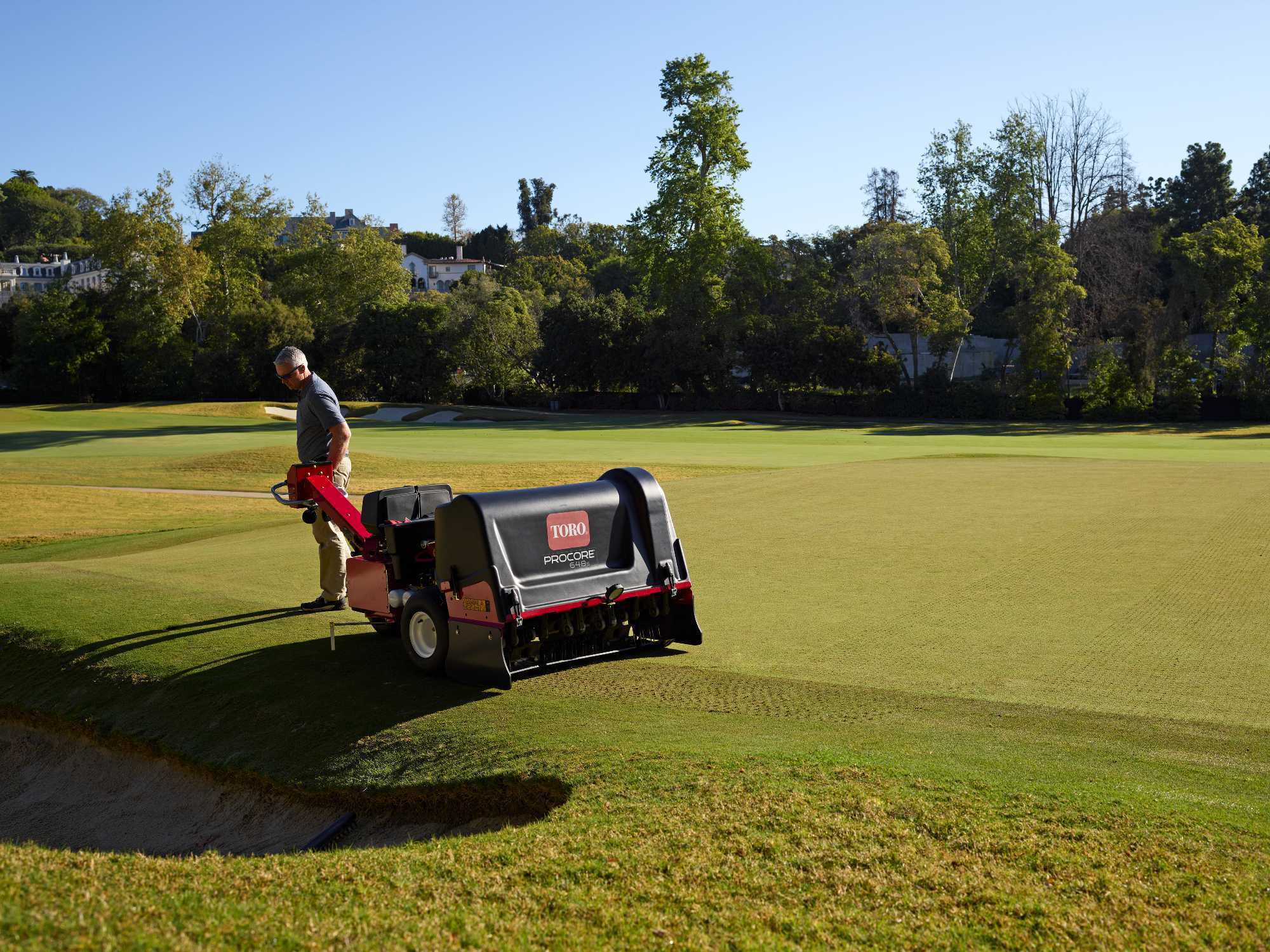
A grounds operator using a Toro ProCore aerator to deliver precise, efficient turf aeration on a sports field.
Soil compaction and the importance of healthy roots
Soil compaction is one of the biggest challenges facing turf managers, particularly on high-traffic sports pitches, as it prevents roots from accessing the nutrients they need. The result is a weaker, less resilient turf canopy, prone to damage and poor water drainage.
Healthy roots, on the other hand, lead to healthy pitches. Deep and strong root systems allow the turf to absorb essential nutrients, efficiently absorb water and recover from wear faster. Aeration encourages all this by decompacting the soil profile, supporting root development and helping break down harmful organic matter naturally.
Assessing soil conditions
Before any aeration programme begins, assessing factors such as soil type, moisture and compaction levels and the overall health of your turf determines which aeration method and depth will deliver the best results without causing excessive surface disruption.
By aligning soil data with seasonal patterns, turf teams can avoid unnecessary disruption and maximise the long-term benefits of aeration.
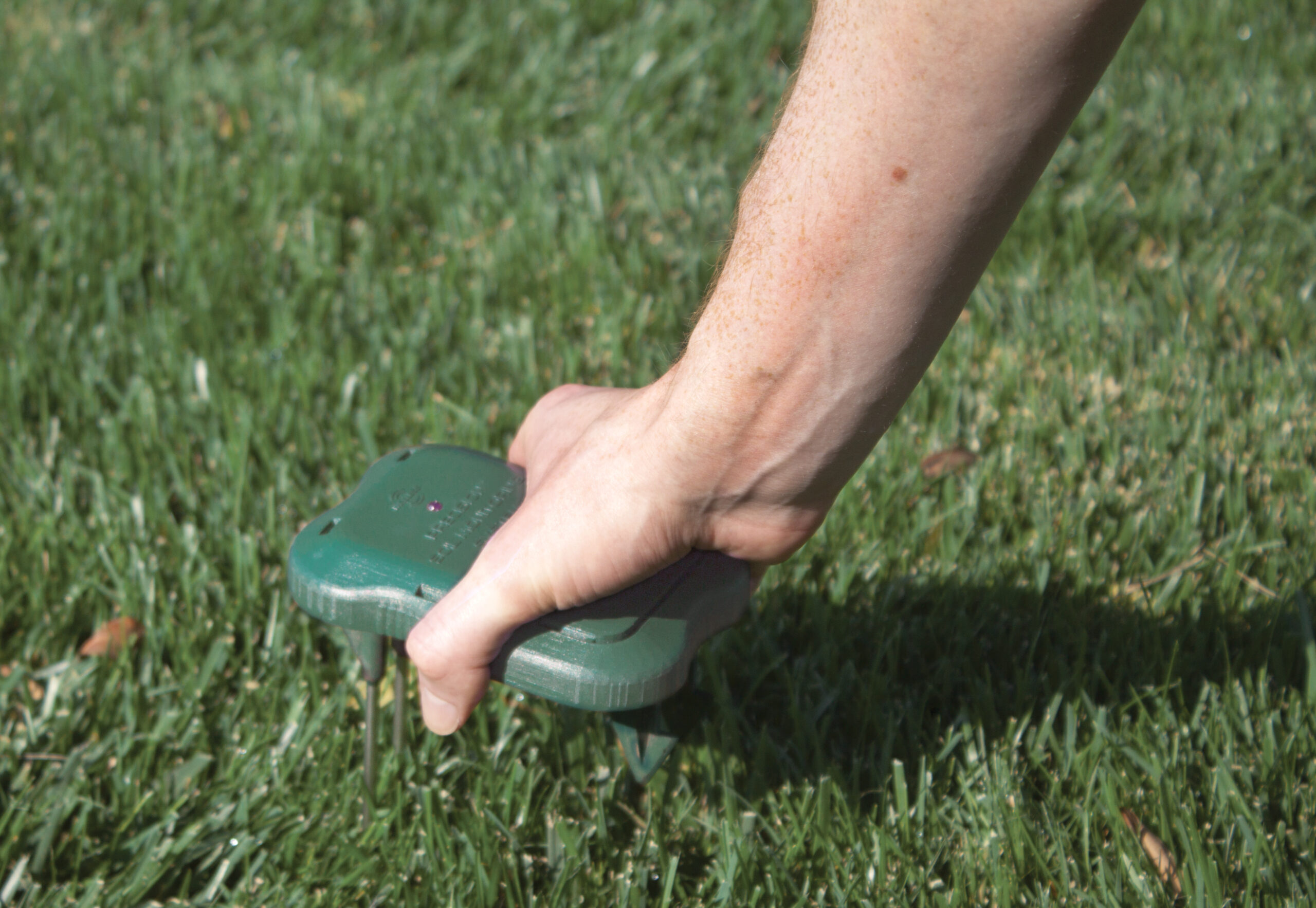
A grounds professional using a handheld soil assessment tool to check compaction levels before aeration.
Aeration techniques for football and sports fields
There’s no one-size-fits-all approach to aeration: the right method depends on weather and soil conditions. Here’s a closer look at the most common types of aeration and when to use them.
1. Hollow tine aeration
Hollow tine, or core aeration, removes small plugs of soil from the surface to tackle deep compaction, break down heavy thatch buildup and restore soil porosity.
Due to the disruptive nature of the process, this type of aeration should not be employed too often and be limited to key growing periods when turf can recover quickly from the more intensive process.
For cool-season grasses, those recovery windows are typically spring and autumn, while warm-season turf responds best to hollow tining in late spring or early autumn.
2. Solid tine aeration
Solid tine aeration uses solid metal spikes to punch small holes into the turf, improving surface oxygen and water infiltration without major disturbance.
This method is ideal for periods when turf is under stress and can’t tolerate aggressive aeration or for frequent, ongoing maintenance, helping to relieve shallow compaction and sustain root activity between matches.
3. Linear aeration
Linear aeration uses rotating blades or discs to cut narrow, continuous channels into the soil.
As it mainly affects the upper layers of the turf canopy, this method relieves only shallow compaction and enhances air circulation and drainage at a superficial level.
However, by causing minimal disruption to the surface, linear aeration is particularly suitable for sports turf and other high-use areas that need to remain playable shortly after the treatment.
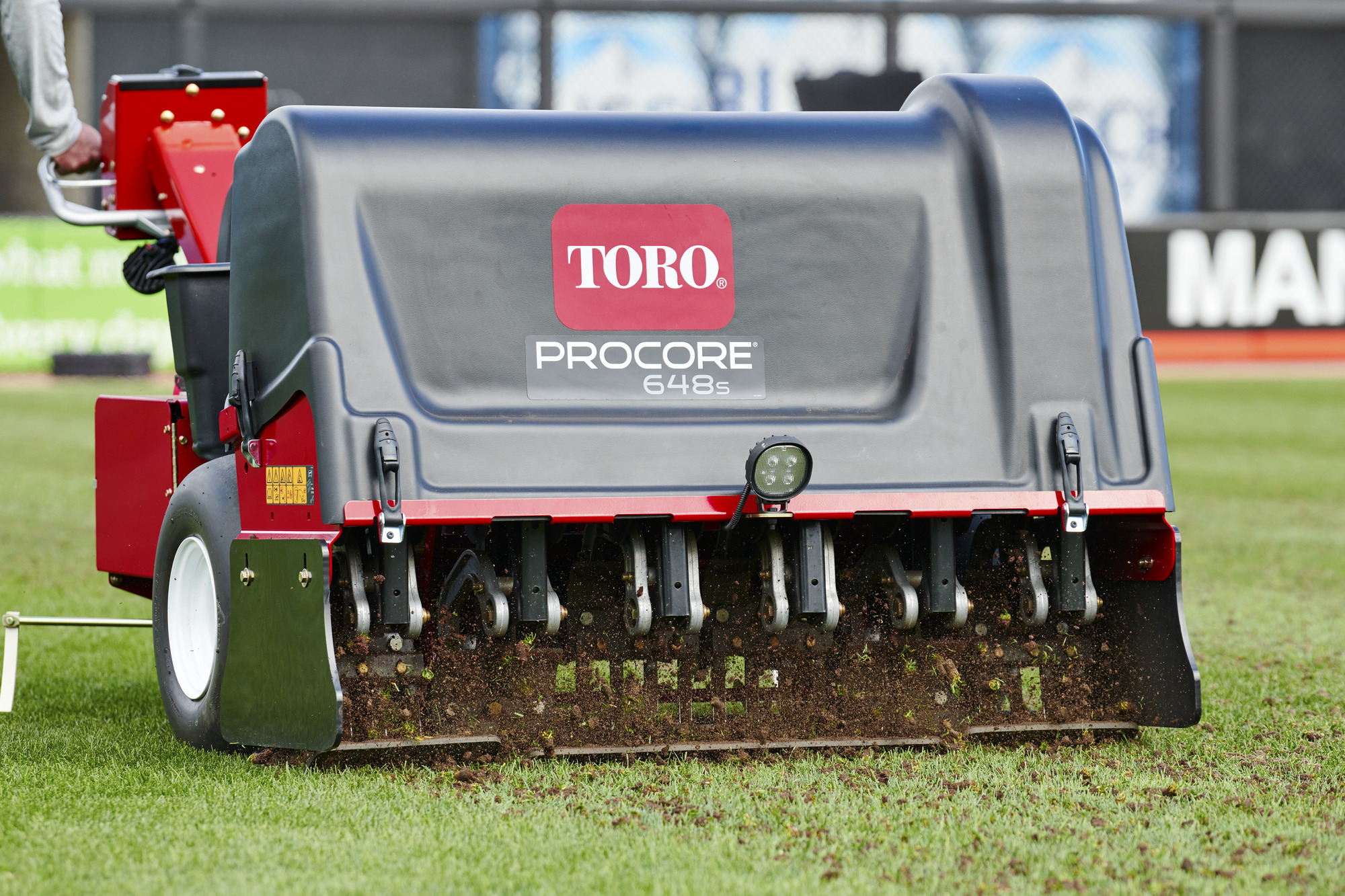
The Toro ProCore 648s in action, delivering clean, consistent aeration holes for improved turf health and drainage.
The right equipment for the job
Toro continues to set the benchmark in aeration technology. From design to manufacturing quality, every detail is engineered for superior precision, durability and performance.
Toro Titan tines, for example, last up to four times longer than standard versions and deliver cleaner holes for better nutrient and moisture penetration.
When it comes to choosing the right aerator, it depends on your requirements:
- The Toro ProCore 648s offers unmatched manoeuvrability and is widely recognised for its precision and productivity in pedestrian aeration. Capable of covering up to 18 greens in just seven hours and reaching a depth of four inches, it delivers exceptional results with minimal disruption.
- With a working rate of up to 1.5 acres per hour and a maximum depth of five inches, the Toro ProCore 864 combines superior productivity and precision. The machine’s unique head drive design eliminates rocking and vibration, resulting in a smoother, more comfortable experience for operators and consistently clean results.
- The Toro ProCore SR54 is a lightweight deep-tine aerator reaching depths of up to 10 inches. With a 54-inch working width and operating speeds of up to 2.5mph, it offers fast, efficient aeration while maintaining a gentle touch on the turf – leaving behind a smooth playing surface ready for immediate use.
- Last but not least, for effortless core removal, the Nordic Plow Core Solution attachment helps clear surfaces in minutes, suitable for football pitches, golf courses or cricket fields.
Finding the right solution for your unique situation can occupy time and precious resources; check out our turf aerator buyer’s guide to simplify the process.
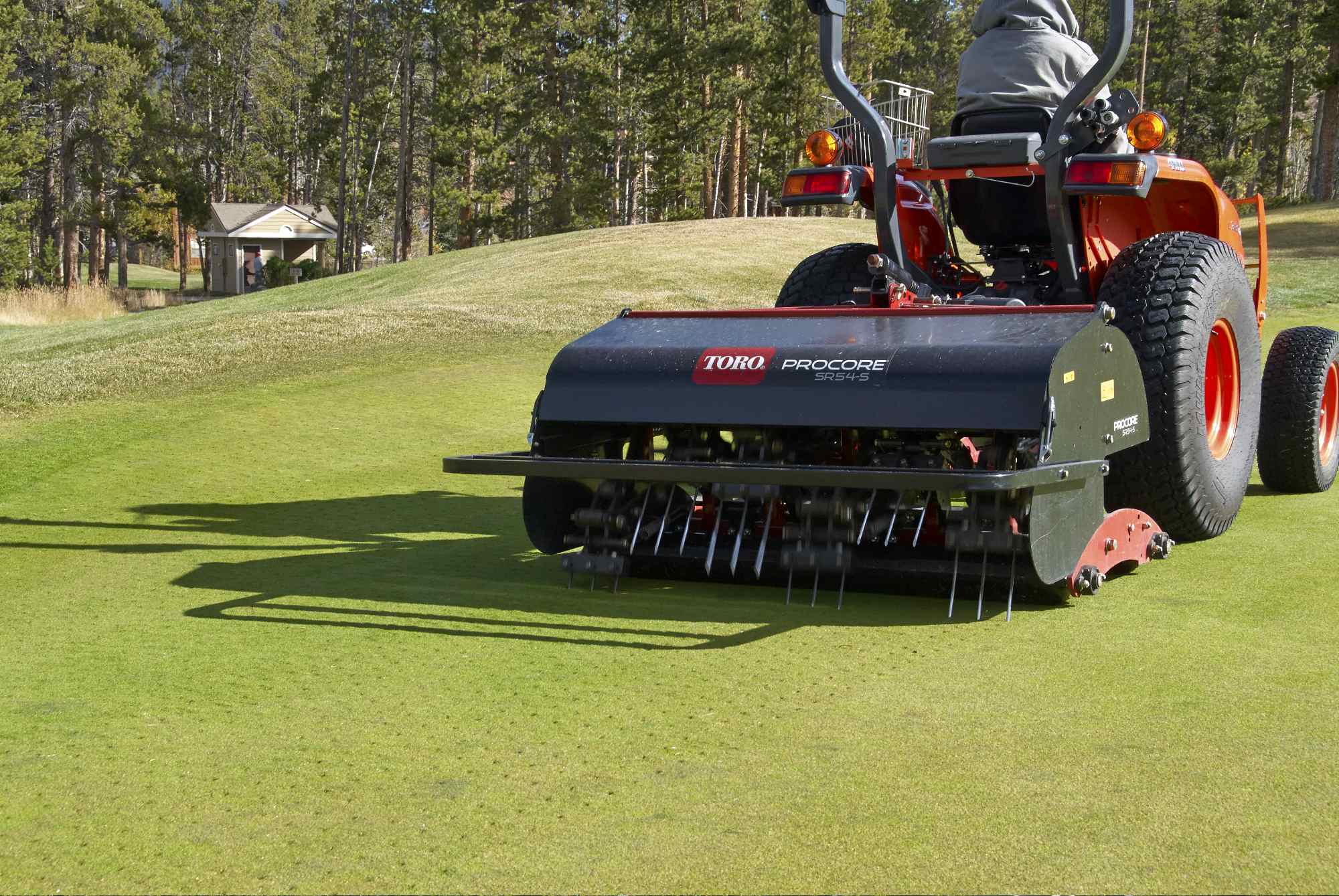
A Toro ProCore SR54-S aerator delivering deep, uniform aeration across a sports turf surface for improved root development.
Integrating aeration into your pitch management plan
To support turf health and ensure superior pitch quality, grounds teams should align aeration with complementary practices such as fertilising, topdressing or overseeding.
Applying a nitrogen-rich feed after aeration encourages recovery and growth, while topdressing – spreading a fine mix of sand, soil or loam over the surface – helps smooth irregularities, improve drainage and integrate new seed.
Equally important is knowing when not to aerate. Excessively wet conditions can smear the soil and close aeration holes while excessively dry turf may struggle to recover from the stress of aeration. As always, regular testing and analysis of soil conditions remain essential.
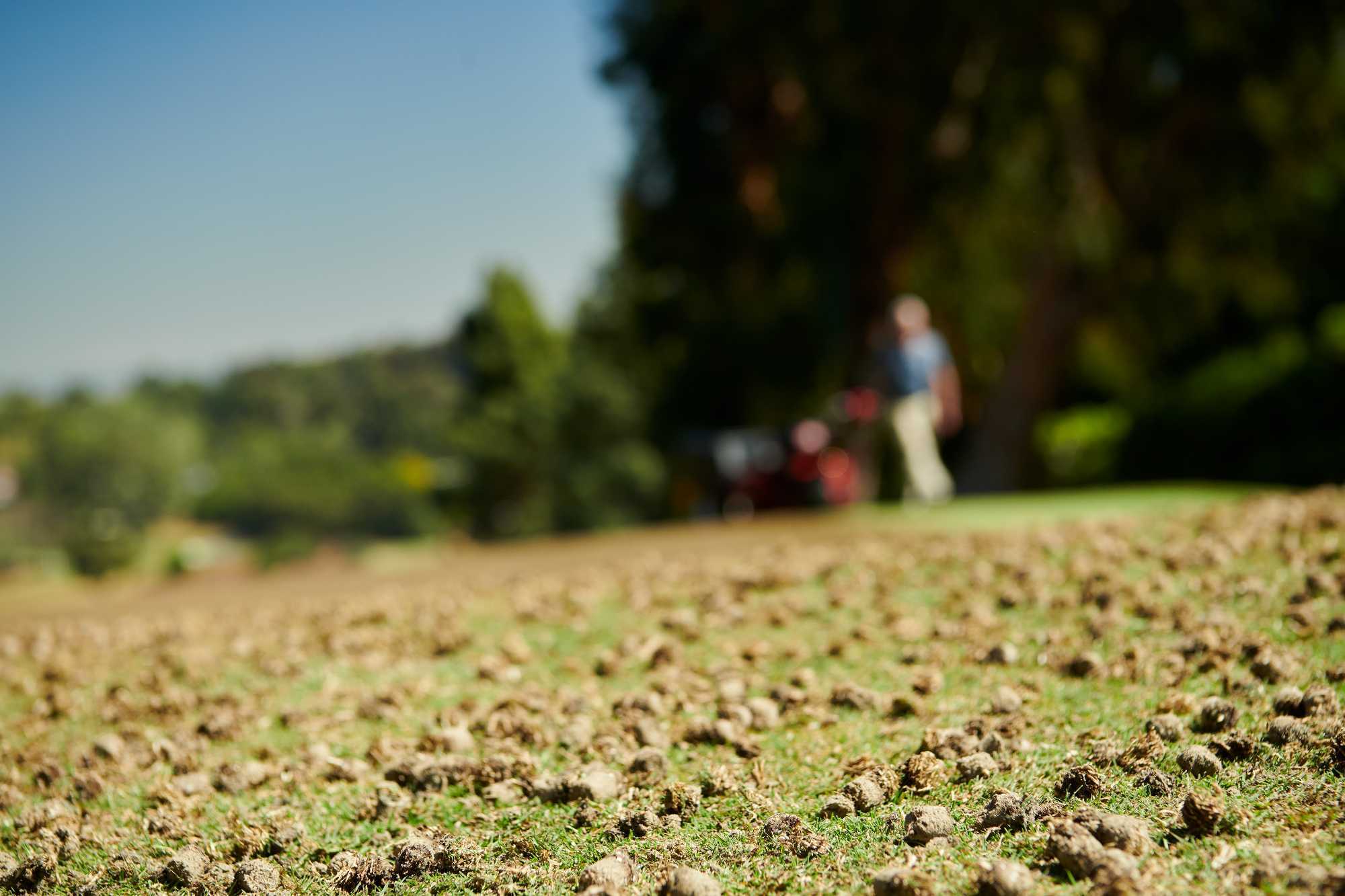
Soil cores left on the surface after hollow-tine aeration, ready to be collected and removed as part of the turf maintenance process.
How Reesink helps you get the best from your turf
Every football pitch, golf course or cricket field tells a different story: of the games played, the weather endured and the care it receives. At Reesink, we help grounds and greenkeeping teams ensure that story is one of performance and lasting quality.
From innovative Toro aerators to high-precision topdressing machinery, we supply everything you need to manage aeration and soil health with confidence. Our exclusive partnership with Toro means guaranteed parts authenticity, expert advice and nationwide stock availability, ensuring every machine performs as designed, season after season.
Discover how we can support your programme by contacting us through this form, calling 01480 226800 or visiting reesinkturfcare.co.uk.