
A practical buyer’s guide: turf debris management for golf courses and sports fields
As autumn returns, turf professionals face a familiar, time-consuming challenge: managing debris efficiently. Whether it’s kilos of fallen leaves, branches and twigs, grass clippings or other forms of plant debris, ensuring the turf surface is thoroughly and frequently cleared is essential to maintain high presentation standards and healthy grass.

However, debris management is time-consuming and can quickly deplete your team’s resources when new piles of leaves build up throughout the autumn season. That’s why, for golf courses and sports grounds, investing in modern debris management tools is essential to save on labour, protect the turf and ensure it always remains in peak condition.
This guide will help you understand the different types of equipment, the pros and cons and which solutions will best suit your site. While we’ll focus on natural turf, the same debris management principles also apply to artificial turf maintenance and can be followed to keep synthetic turf and artificial grass surfaces clean, safe and aesthetically pleasing.
What is turf debris management?
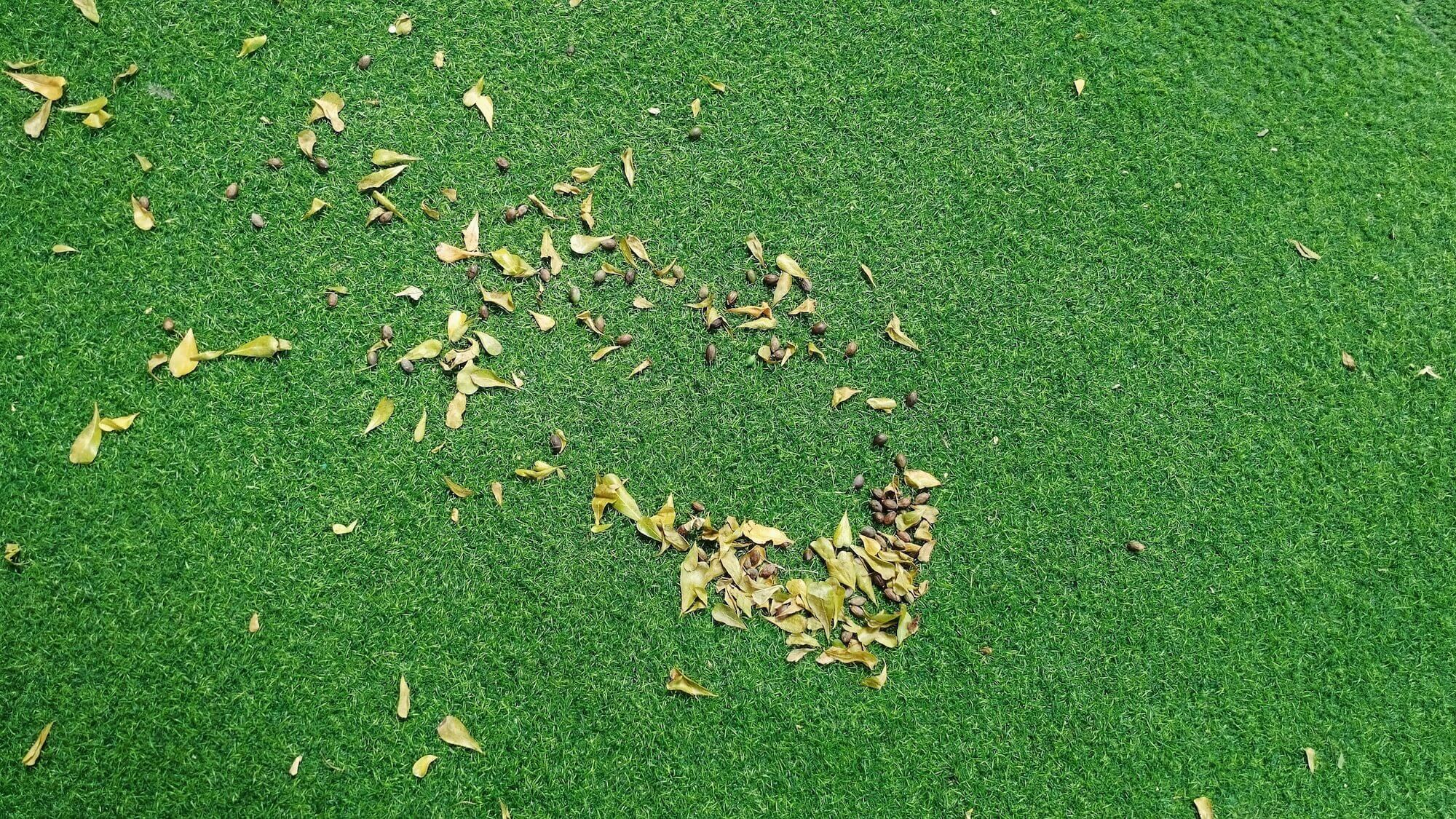
Turf debris management involves the regular removal of organic and inorganic materials that accumulate on the turf surface year-round. However, the task becomes particularly important in autumn, when the amount of fallen leaves and dry twigs increases significantly.
Why removing fallen leaves and other debris is critical
At first glance, clearing leaves and debris might seem like a purely aesthetic task – but its importance goes far beyond presentation. Regular debris removal supports:
- Turf health – as leaves and larger debris can block sunlight, cause excessive moisture retention, encourage moss and mould growth and restrict airflow to the turf canopy, resulting in weaker, disease-prone grass.
- Playability and safety – on fine turf surfaces like golf greens and sports pitches even a thin layer of leaves can impact ball roll, cause slippery conditions (dangerous for athletes) and compromise playability.
- Turf nutrition and aeration – as layers of decomposing debris can clog the turf surface, removing them improves drainage and promotes water infiltration and oxygen exchange within the soil.
- Efficient operation – leaves left too long on the ground become compacted and harder to remove, turning a simple maintenance task into a labour-intensive process.

Ideally, debris should be cleared at least once a week during the period of peak fall foliage to prevent turf damage and ensure resilience through the wetter months of the year.
Key considerations for buyers
Today, a wide range of solutions are available to help busy teams tackle essential debris removal tasks in a simple, manageable way and without draining an excessive amount of resources.
Before you establish which tools and features can best suit your unique situation, here are a few factors relating to your venue that should also guide your choice.
1. Turf type and site size
The size and layout of your facility are among the most important considerations influencing the right debris management system for your team.
- Large, open areas such as golf fairways, sports pitches and parklands benefit from powerful blowers and collectors designed to cover wide spaces quickly and with generous hopper volumes to minimise the time spent disposing of the debris.
- Smaller or intricate sites often require more compact, agile units that can easily navigate tight spaces without disturbing the playing surface or compacting heavy foot-traffic zones.

Consider the topography of your venue – slopes, trees, bunkers and other obstacles can dictate how manoeuvrable or lightweight your equipment needs to be. Machines with rotating nozzles, swivel wheels or flexible tow options can make a noticeable difference when working around complex layouts.
2. Debris type
Not all debris behaves the same, and the type you most frequently encounter should also guide your choice of equipment.
- Heavier material, such as wet leaves, acorns or twigs, requires greater suction and airflow power to lift and transport effectively.
- Lighter debris like grass clippings, dry leaves or pine needles can be handled efficiently with lower airflow rates and more precise directional control.
Understanding the dominant debris types on your site ensures you’re not over- or under-specifying your machinery, saving both time and fuel while also improving results.
3. Noise pollution
With many golf courses, sports facilities and public grounds located near residential areas, noise reduction is increasingly important.
Selecting equipment engineered for quiet operation – such as blowers with optimised impeller housings or insulated components – helps maintain good relationships with neighbours and allows for early-morning or late-evening use without disruption.
4. Maintenance needs and durability
Debris management machinery often faces harsh, continuous use through the autumn and winter seasons.
Choosing heavy-duty equipment built from robust materials, with reinforced impellers, corrosion-resistant components and accessible service points, will help ensure reliability year after year. Look for designs that make regular maintenance easier and simplify important tasks such as cleaning filters, inspecting belts and performing routine servicing.
Which debris management solution is right for you?
When it comes to removing leaves, turf professionals managing large venues rely on two main tools: towed debris blowers and collectors. While handheld equipment like power brooms or metal rakes can still play a role in small parks, gardens or artificial lawns, for golf courses and sports grounds powerful towed solutions offer far greater efficiency.
As you compare different options for your venue, it’s important to consider:
- Power and airflow speed: in general, machines with high horsepower (HP), impeller Revolutions Per Minute (RPM) or airflow volume measured in Cubic Feet per Minute (CFM) deliver a more efficient movement of debris across wider areas.
- Hopper capacity: determines how much debris can be collected before emptying, key for improving productivity on large sites.
- Noise level: particularly relevant for early-morning or urban operations.
- Manoeuvrability: weight distribution, wheel design, ground clearance and rotating nozzles all influence ease of operation.
- Tow requirements: ensure your tractor or utility vehicle provides sufficient horsepower to match the blower or collector’s demands.
Blowers
These machines use powerful airflow generated by an impeller to blow away debris quickly across large turf areas. The impeller’s metal blades spin at high speed, forcing air through a nozzle that can be fixed or adjustable for more precise control of the airflow.
As this method allows operators to move debris from a distance, blowers are ideal for clearing fairways, roughs and large sports pitches where speed and maximum coverage are priorities.
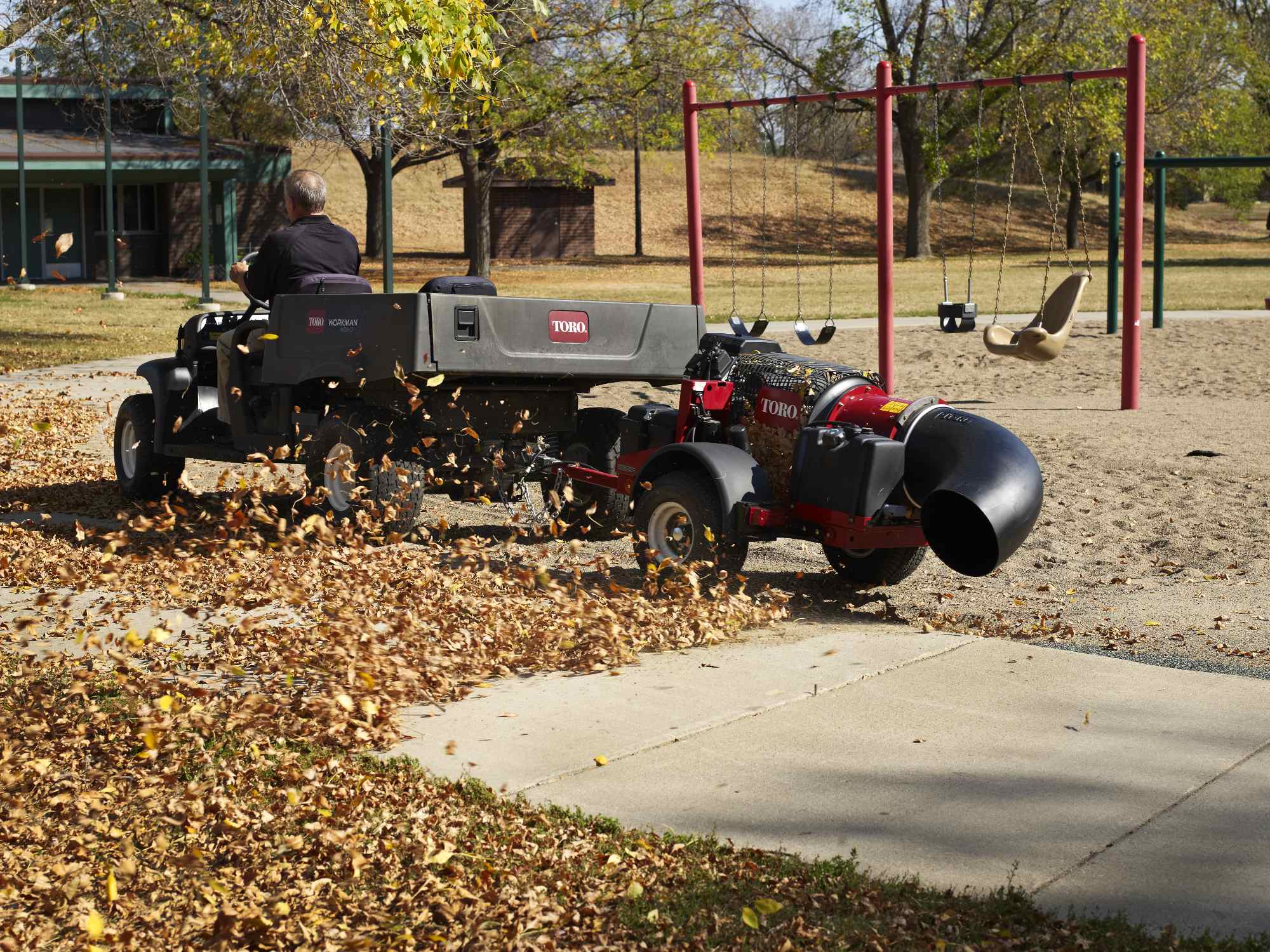
Toro Pro Force
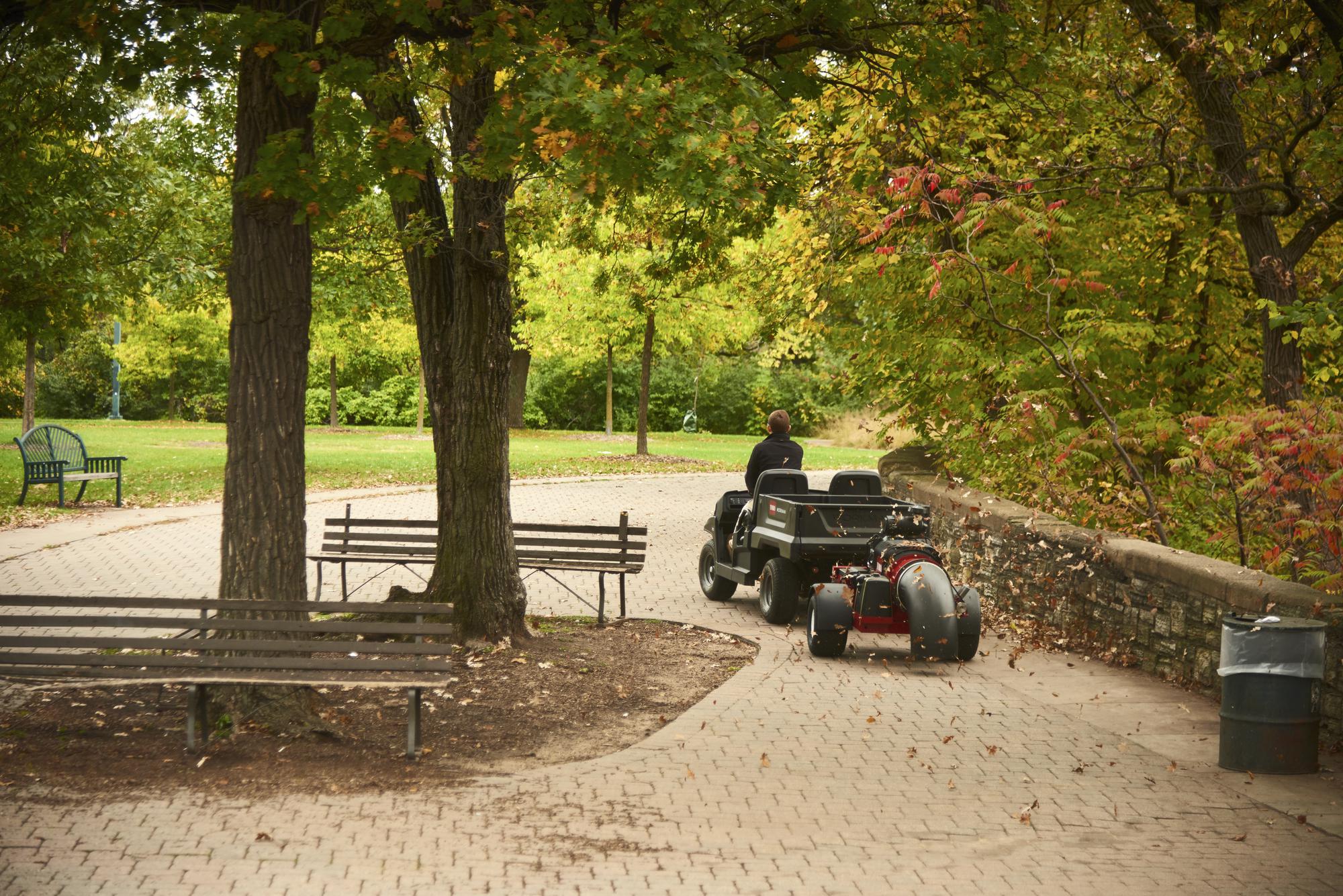
The compact Toro Pro Force is a self-contained, engine-powered blower that eliminates the need for a PTO vehicle. Featuring a 24.6 HP Kohler engine, it generates greater air volume flow than any single nozzle turbine-type blower while remaining light and easy to tow with a Workman UTV – the perfect solution for undulating or sloped terrain.
Operators can control every key function via a wireless remote, including switching the engine on and off, rotating the nozzle 360° and adjusting the RPM for a full range of operation. This hands-free convenience, combined with Toro’s rugged trailer frame and adjustable tow hitch, makes the Pro Force a standout for large turf venues seeking precision, ease of use and versatility.
AgriMetal B35 and B50
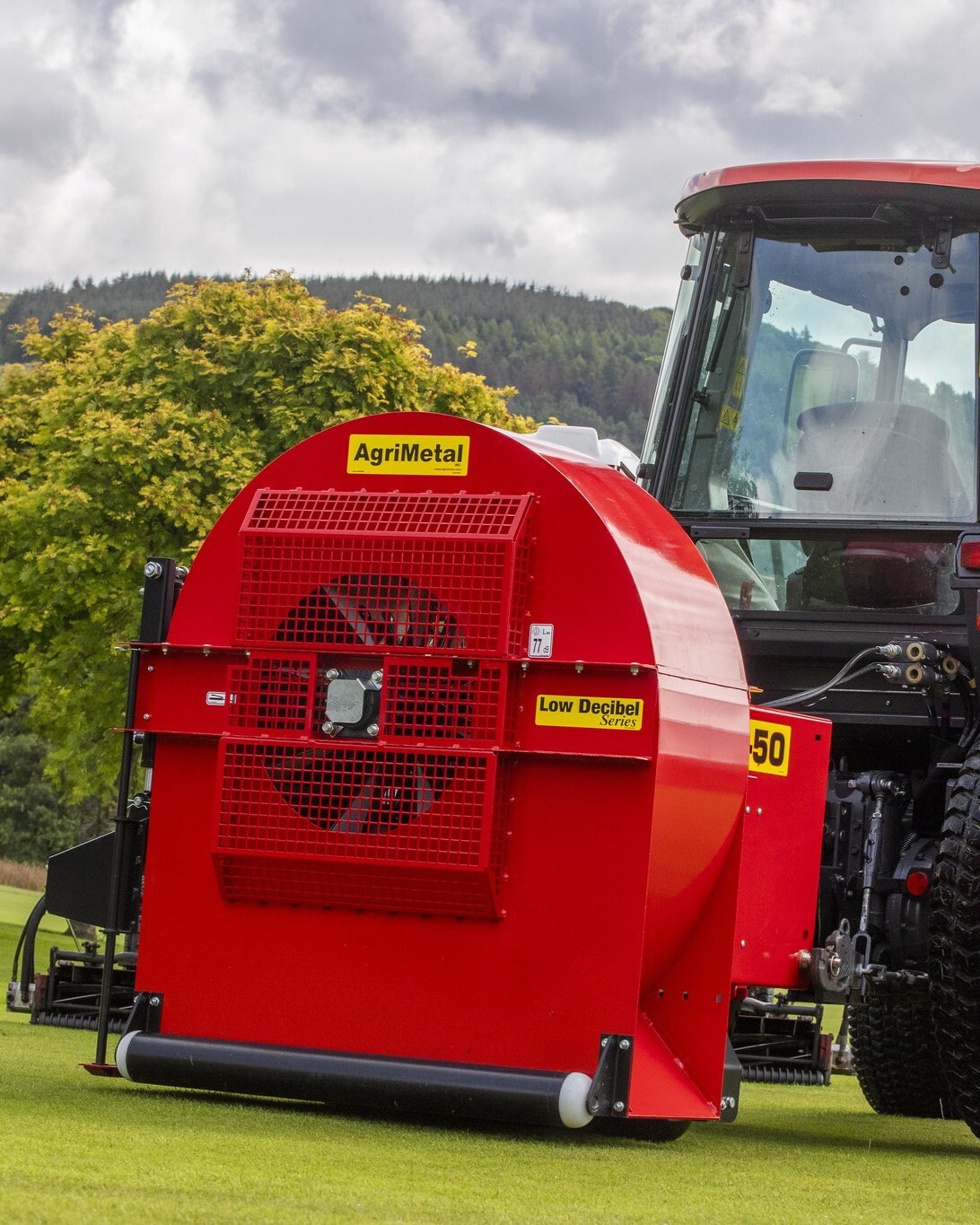
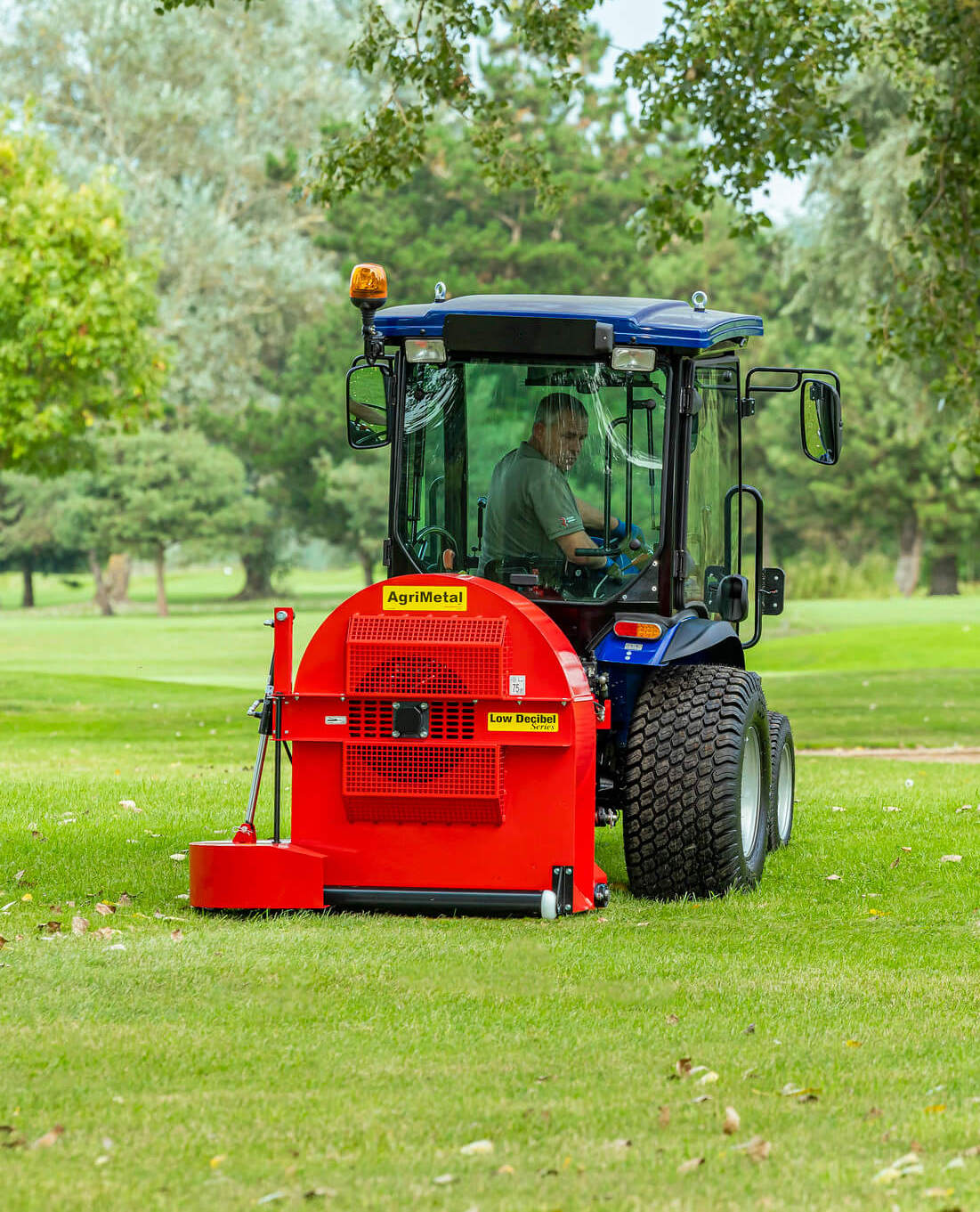
AgriMetal’s B35 and B50 feature a Max Flow impeller system that redefines blower performance by increasing airflow by up to 25 percent compared to conventional models. The lightweight aluminium impeller reduces energy demand as well as noise and vibration, while the paddle design draws in air from both sides and the centre, creating a strong, efficient airflow that requires less energy.
The B35 generates a flow rate of 12.500 CFM, requiring 35 HP at the PTO, while the B50 offers maximum coverage and a flow rate of 13.750 CFM for heavy-duty operations, requiring 50 HP at the PTO. Both feature a belt drive system with an automated spring tensioner for minimal maintenance and optional air deflectors for directional control. For added surface protection, operators can fit an anti-scalp roller, which prevents turf damage and helps smooth minor surface imperfections – ideal for maintaining turf quality even in wet autumn conditions.
Collectors
Debris collectors, meanwhile, operate by suction. As the machine moves across the surface, a fan or impeller creates negative air pressure, drawing debris into a chute and depositing it into a hopper or collection bin.
Many systems also shred or mulch debris, reducing its volume and allowing operators to work longer before having to empty the collected material. These machines are especially effective on damp leaves or larger organic matter that’s harder to blow away.
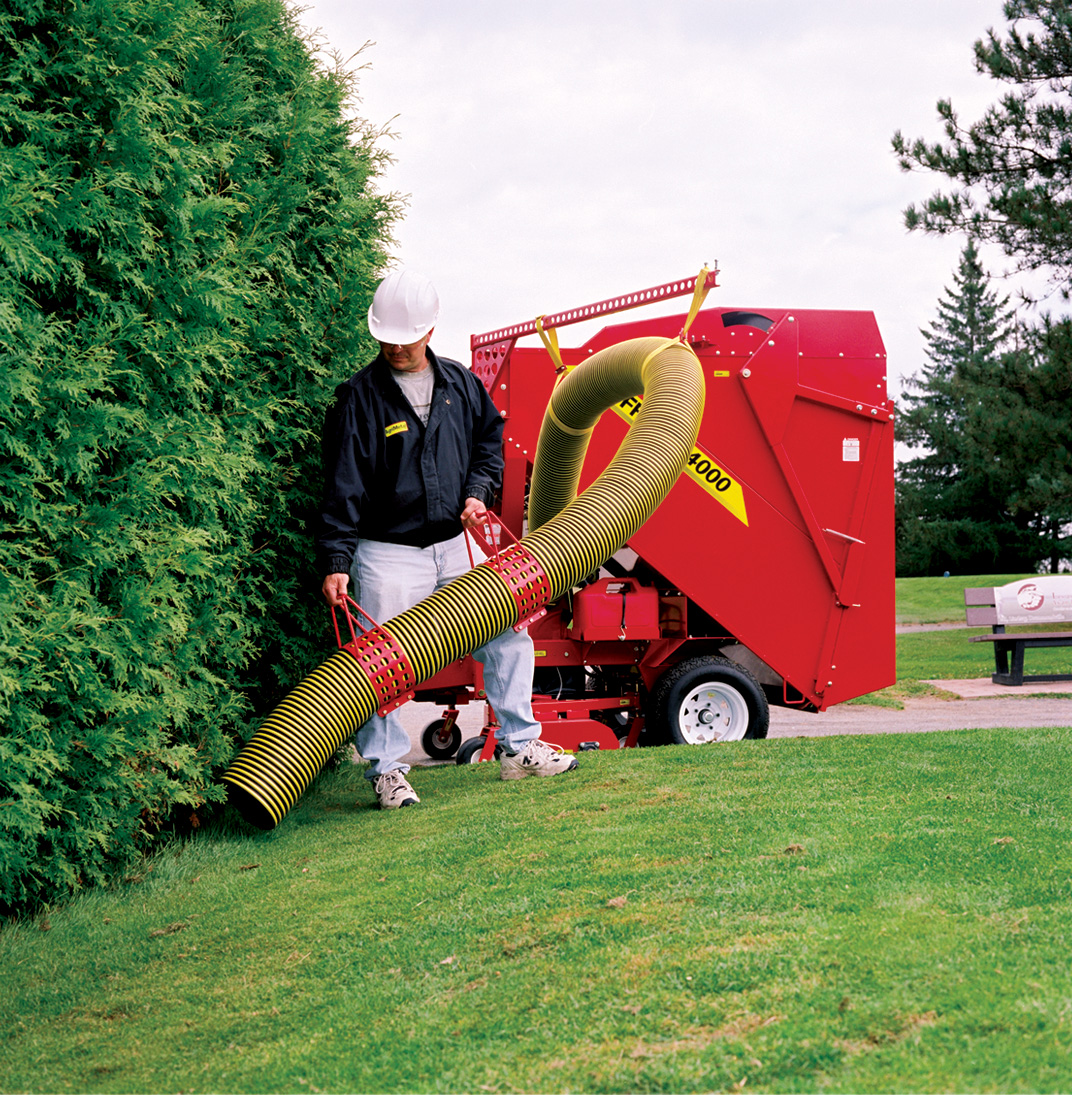
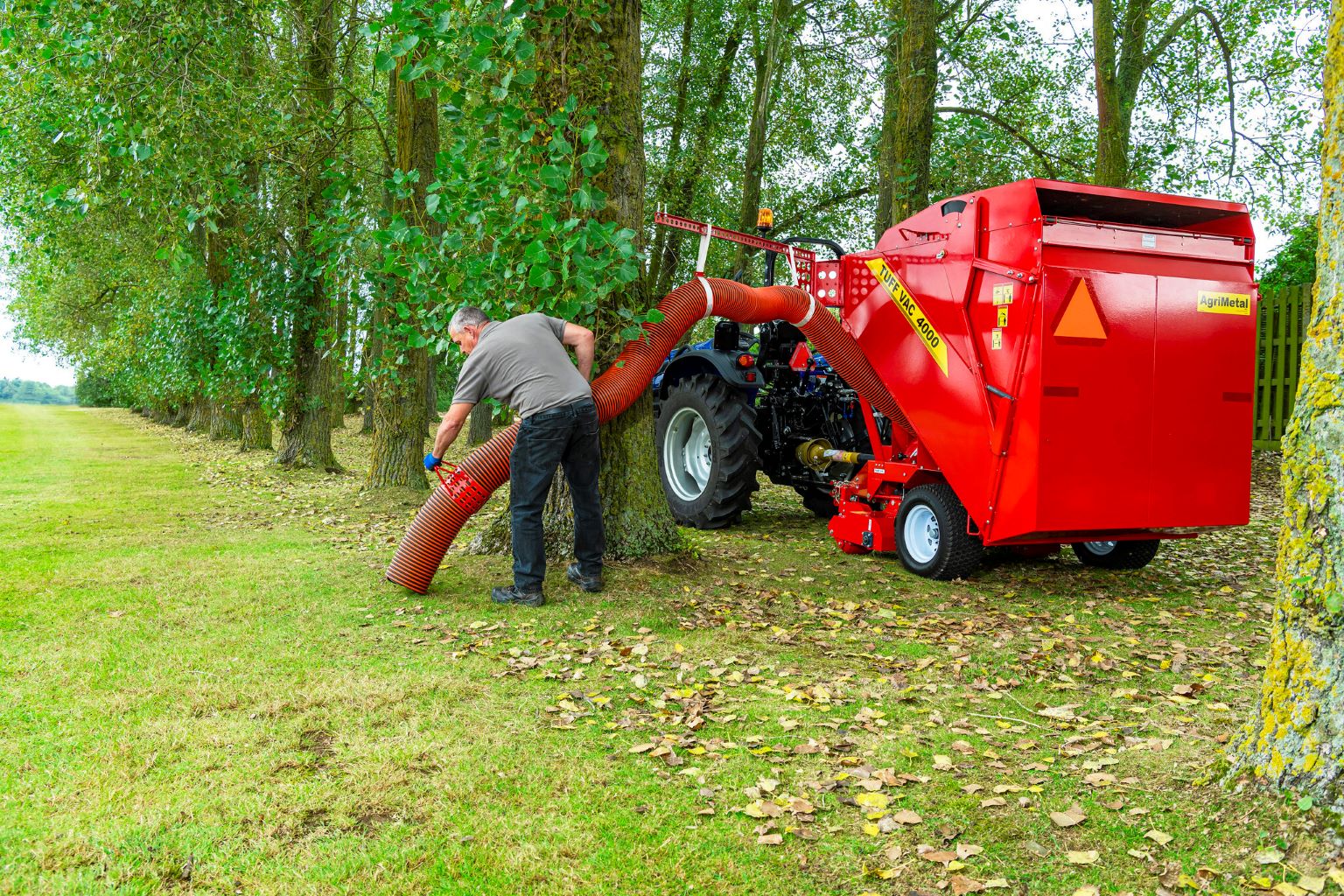
AgriMetal Tuff Vac 4000
Designed for high-volume collection, the Tuff Vac 4000 combines power and precision with a brush system that sweeps up leaves, branches and even pine straw without damaging the turf, while a 50 percent larger exhaust area delivers superior vacuum power and reduces clogging.
Operators benefit from features such as an optional handheld pickup hose for hard-to-reach areas and a hydraulic rotating brush for stubborn or wet debris. With a recommended 30 HP PTO, the Tuff Vac 4000 is a versatile option for golf and sports turf teams looking to achieve efficient collection performance during peak leaf fall.
AgriMetal Multi Vac collector
For larger facilities or heavier workloads, the Multi Vac series takes debris collection to the next level, requiring approximately 50HP PTO. Its dual rotary shredders break down leaves and twigs to maximise hopper capacity, while a third internal blade located in the pickup throat prevents clogging and a hydraulic dumping system helps empty debris quickly at a 60° angle, so operators can return to work within minutes.
The result? Less downtime, fewer interruptions to empty the debris and higher productivity. Noise is also reduced through AgriMetal’s low-decibel impeller design, making the Multi Vac suitable for residential or park environments.
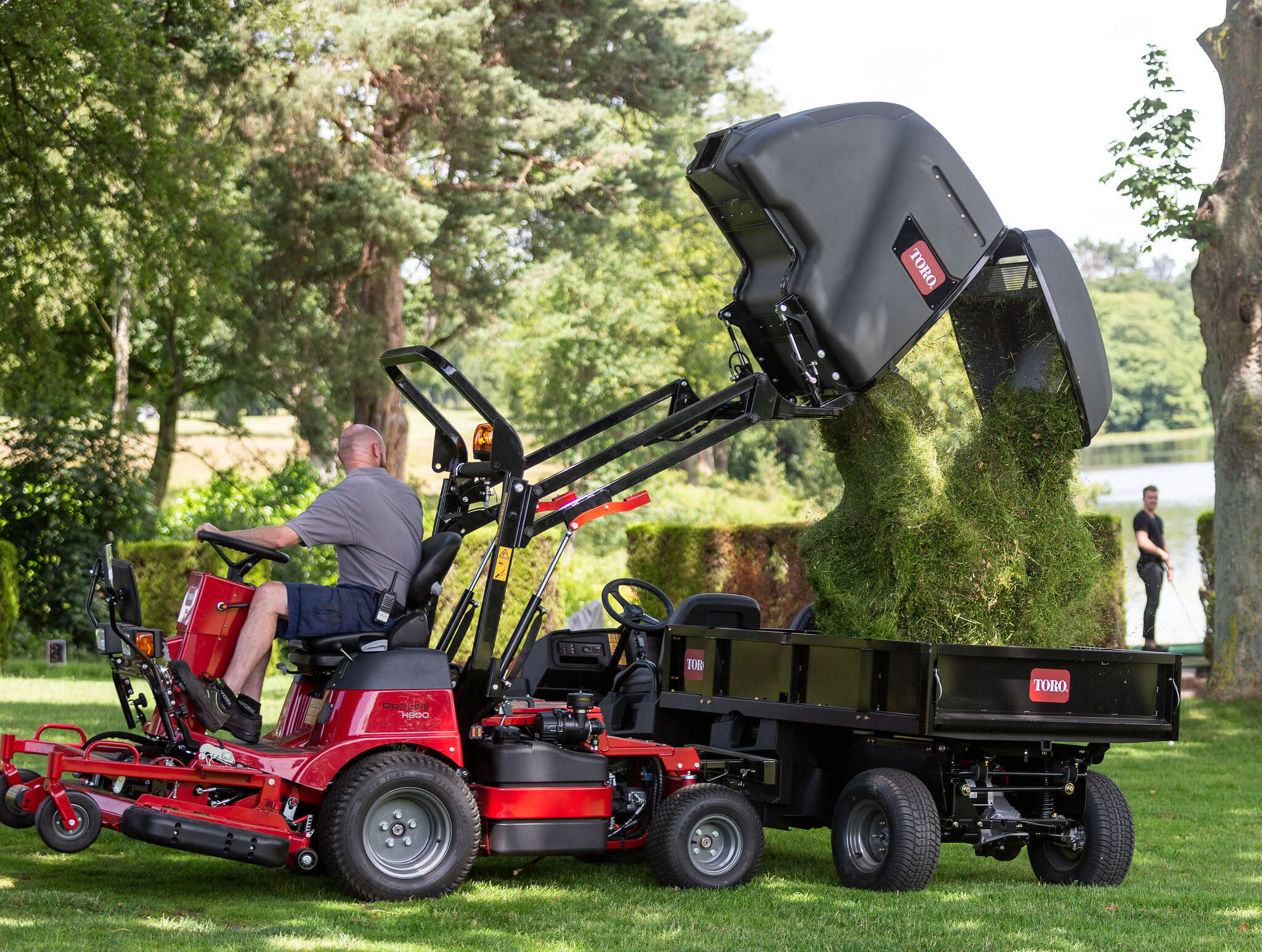
Toro ProLine H800
The Toro ProLine H800 offers a compact, manoeuvrable alternative for sites that need a self-propelled debris management solution. What’s best, it combines mowing and collection in a single model – a cost-effective choice for smaller fleets or local sports clubs where every machine must deliver maximum utility.
Equipped with an 810-litre hopper and Smart AirFlow system, the ProLine captures clippings and leaves efficiently, while its hydraulic lift enables easy dumping at up to 1950mm height. The Smart Cool auto-reversing fan, tilting deck and automatic cleaning wiper all simplify maintenance and extend the machine’s lifespan.
With an agile, compact design and excellent visibility, the ProLine navigates around trees and obstacles with ease and is ideal for maintaining high standards of presentation even in high-traffic or intricate turf areas.
Simplifying turf maintenance with Toro and Reesink
Effective debris management is a key component of turfcare, supporting presentation, playability and turf health. From blowers and collectors to two-in-one mowers, choosing the right machine ensures your team can work smarter, not harder, even during the busiest autumn months.
With Reesink, UK turf managers gain access to market-leading solutions, expert advice and ongoing support. Whether it’s a single machine or a full fleet upgrade, our team helps match the right equipment to your site, ensuring maximum efficiency and performance.
To explore the full range of debris management solutions or arrange a demo, visit www.reesinkturfcare.co.uk or call 01480 226800 to speak with a Reesink expert today.