
What is a rotary mower? A guide for professional turf management
Rotary mowers are considered a reliable all-rounder by many grounds and turfcare professionals, appreciated for their durability, versatility, and ease of maintenance.
The name derives from the typical cutting method of these machines: a rotating blade that spins at high speed to mow grass, as opposed to cylinder mowers – which instead generate a scissor-like cutting action through helical blades that rotate against a fixed bedknife.
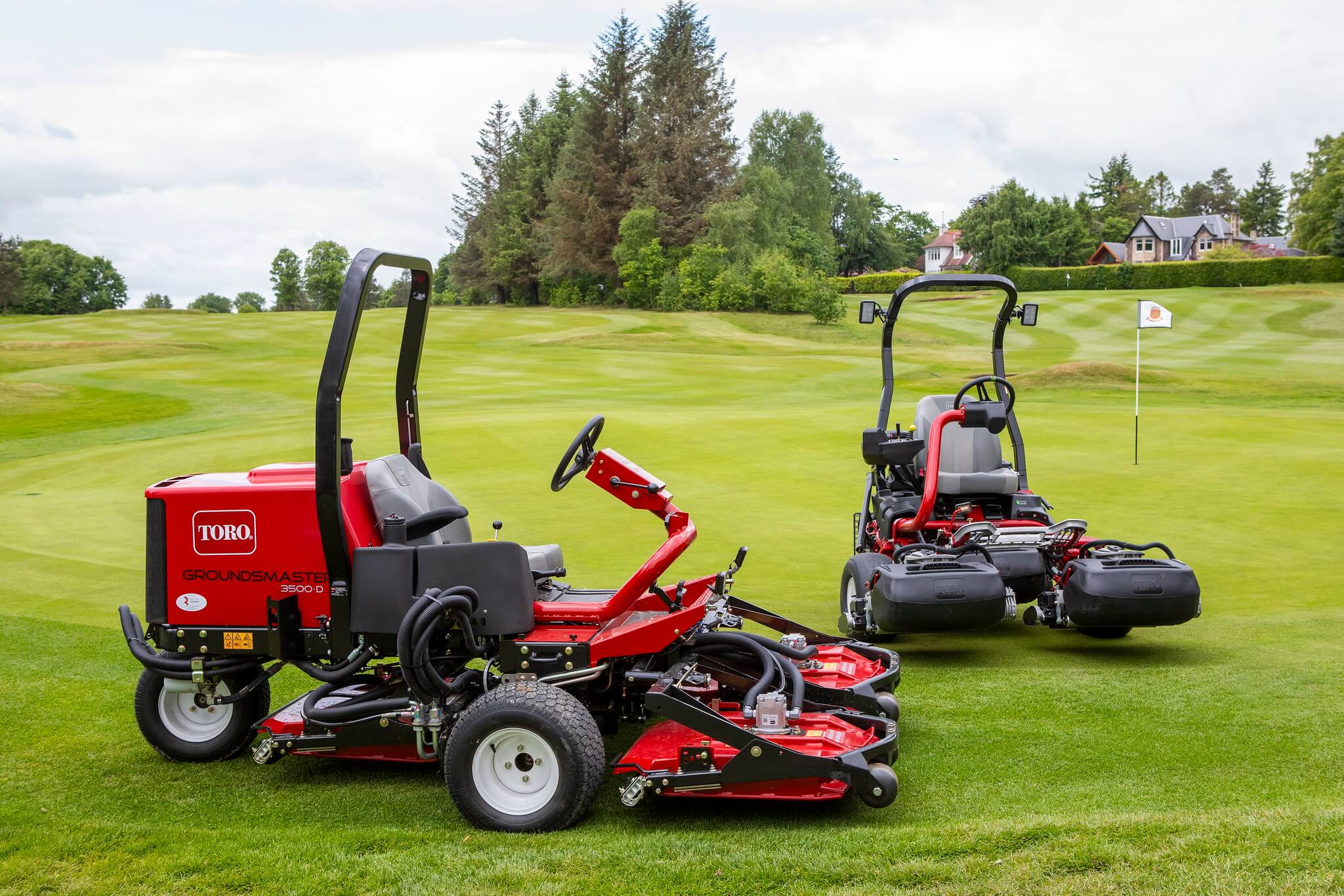
Knowing which type of machine is best suited to which surface is not only key to maintaining the health and appearance of your turf, but also improves operational efficiency and day-to-day tasks. To help you make an informed decision, this guide will cover the benefits and drawbacks of the rotary mower, and how it compares to other machines.
How does a rotary mower work?
A rotary mower features one or more high-speed, horizontal spinning blades mounted on a spindle under the deck, which cut the grass leaf on impact. This chopping action makes these mowers generally more robust than cylinder models, enabling them to cope with a wider variety of turf types and conditions, including long, coarse or wet grass.
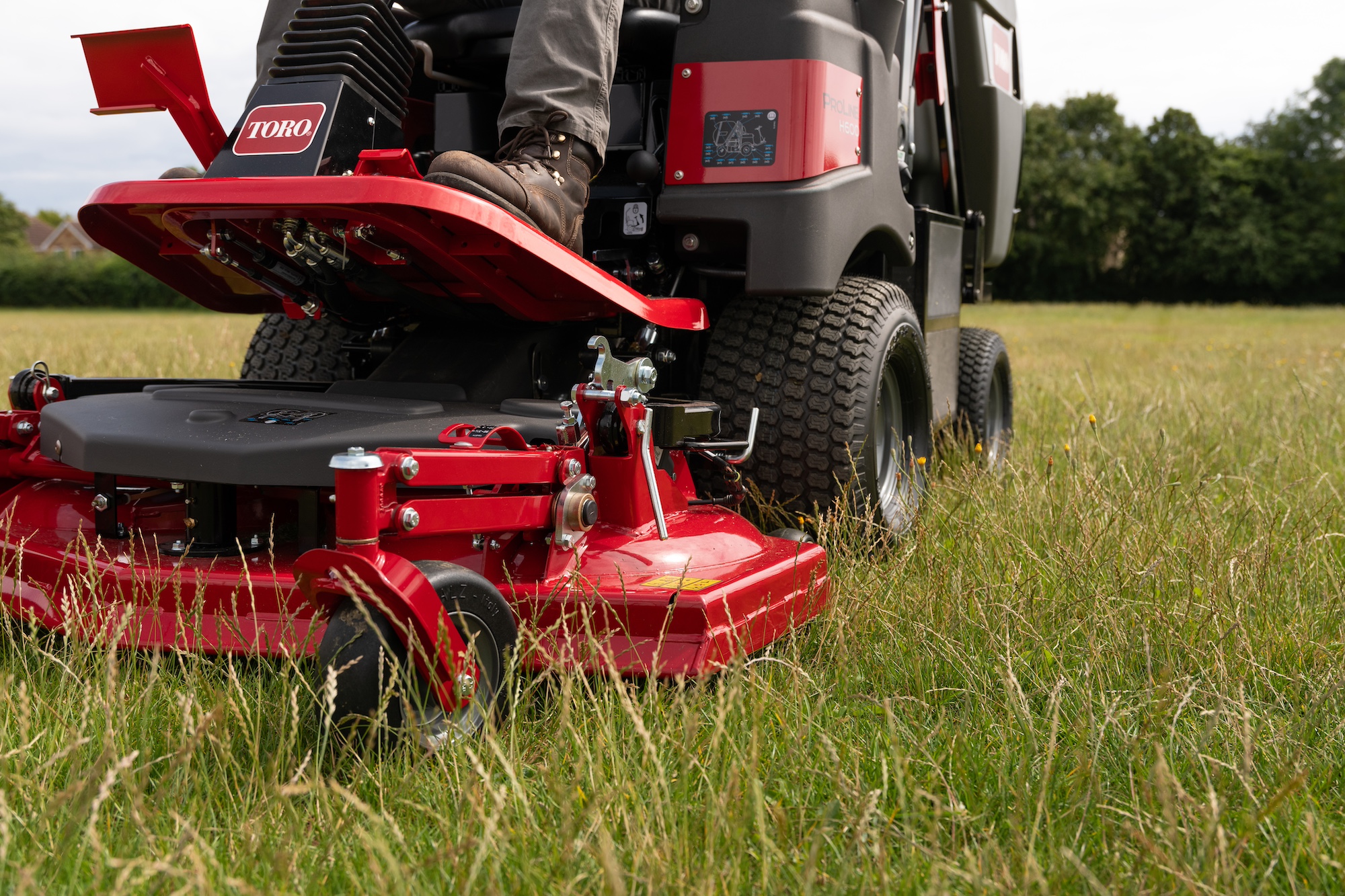
On the other hand, this cutting method makes rotary mowers more suitable for medium to high cuts, since they lack the precision required for the close cuts seen, for instance, in golf greens or cricket squares – which can be achieved with the scissor-like shearing action of a cylinder mower.
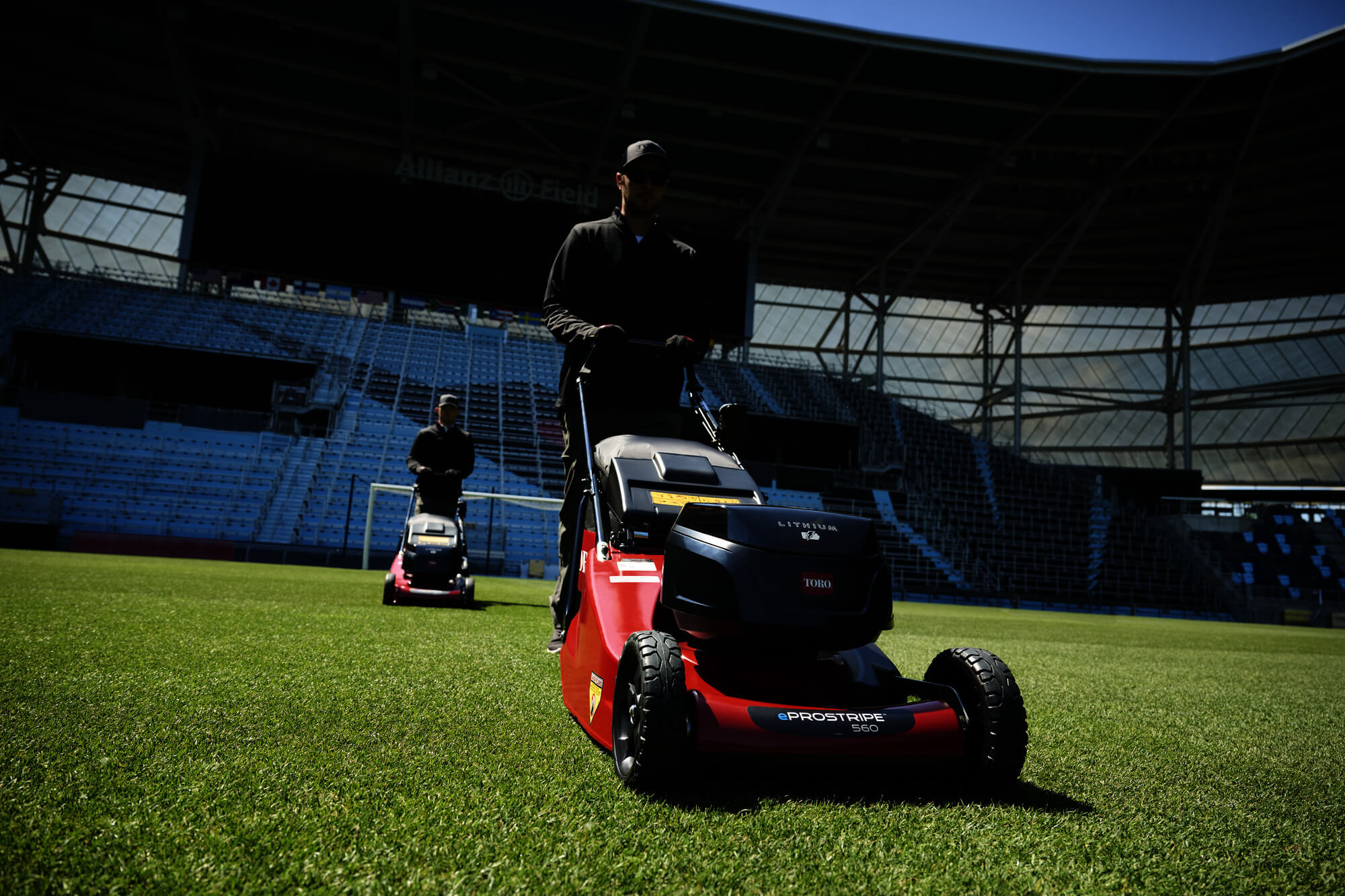
Despite this inherent difference, modern rotary mowers are becoming increasingly accurate, with models like the Toro Turf Pro 300 and 500 being used to maintain fairways in top golf clubs and the Toro eProStripe 560 to provide a crisp, stripe finish in many football and rugby pitches.
Rotary mower benefits for professional grounds and sports turf
Rotary mowers are widely used across amenity and sports turf maintenance because they combine durability, productivity, and operational flexibility.
They are particularly well suited to environments where turf conditions can vary and where teams need reliable machinery capable of covering large areas efficiently. Consider a rotary mower when the following factors are a priority.
Versatility
Rotary mowers perform well across a wide range of grass lengths and surface conditions. From regularly maintained sports pitches to longer rough or infrequently cut areas, their cutting action and robust deck design allow them to handle variable turf with minimal disruption.
They are also more tolerant of debris, uneven ground and changing weather conditions, making them a practical choice for parks, school fields, training grounds and other multi-use spaces.
Productivity
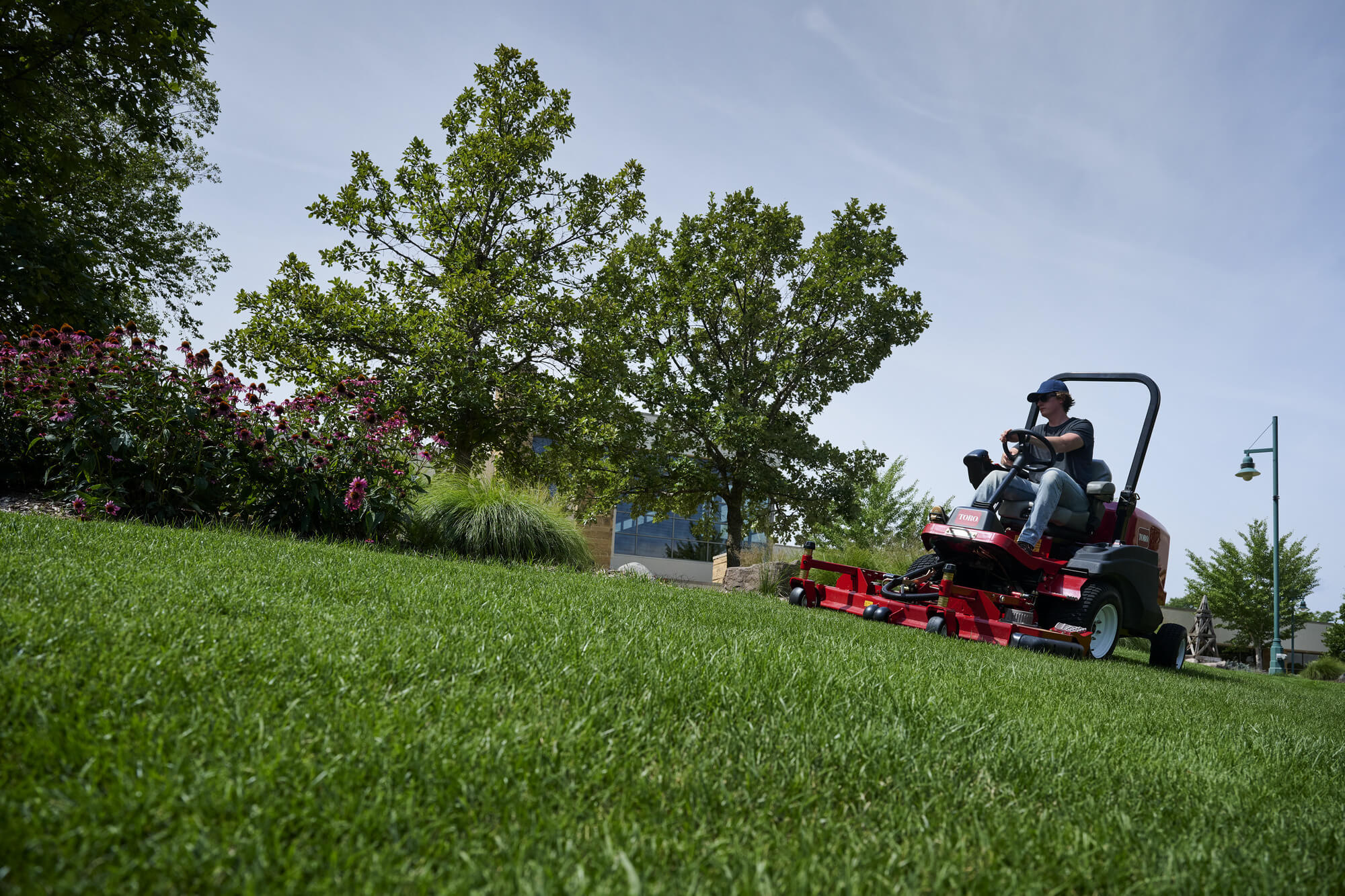
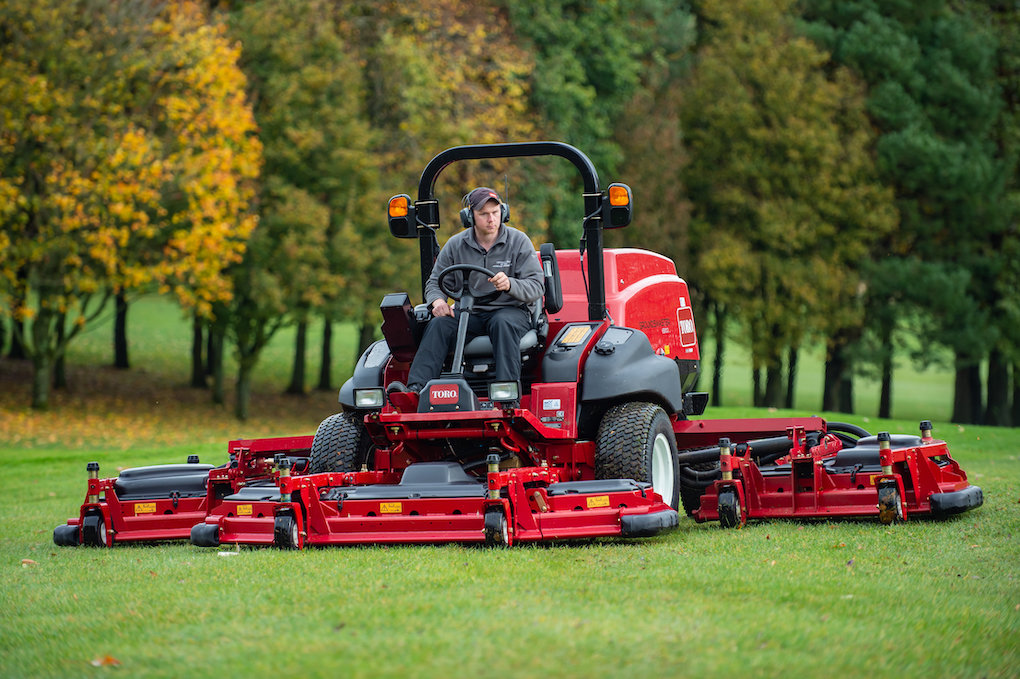
For teams responsible for maintaining extensive areas of turf, productivity is a key consideration. Rotary mowers are often available with wider cutting decks, multi-deck configurations or out-front designs that allow operators to cover more ground in less time.
This makes them particularly effective for maintaining large sports complexes, municipal grounds and amenity landscapes where efficiency and consistent results are essential.
Ease of maintenance
Compared with fine-turf cylinder cutting units, rotary mowing systems are generally simpler to maintain and set up. Blade sharpening and replacement are relatively straightforward, and cutting performance doesn’t rely on precise cylinder-to-bedknife alignment.
While regular maintenance remains important, this simpler setup can reduce downtime and help teams keep machines in operation during busy growing periods.
What maintenance does a rotary mower need?
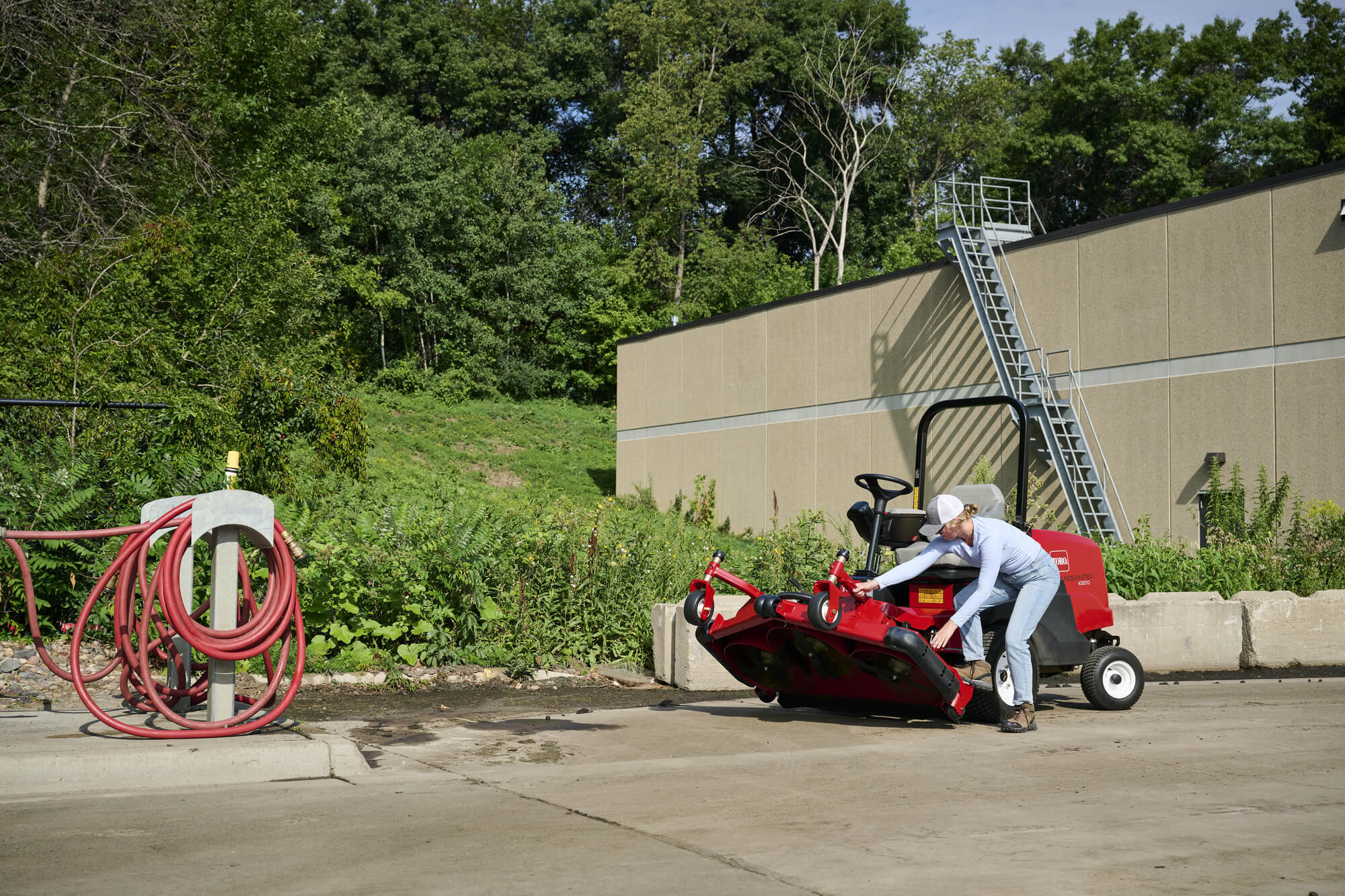
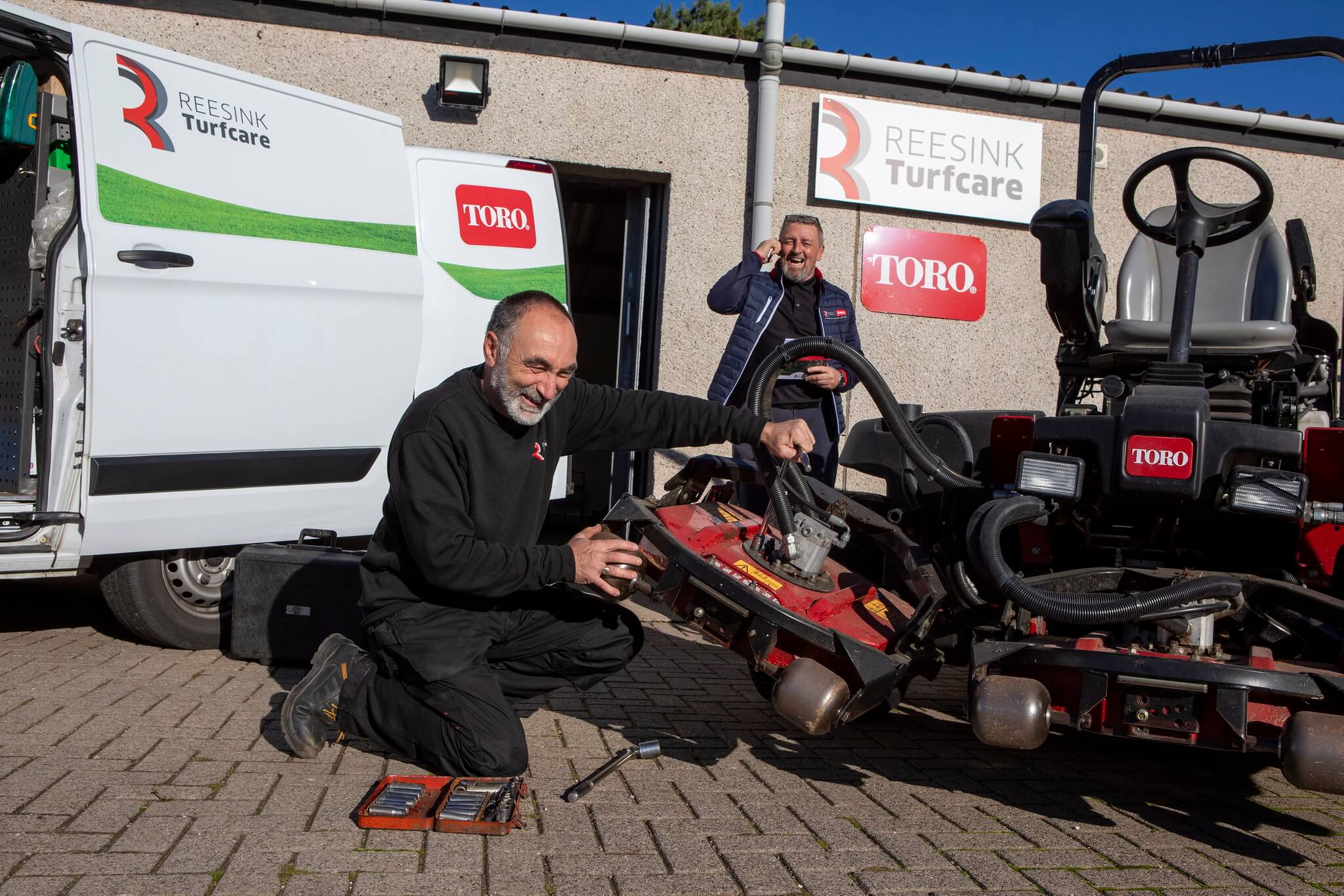
- Sharpen blades regularly: sharp blades produce a cleaner cut, promoting healthier turf and reducing stress on the engine. Rotary blades are easier to replace than cylinder mower blades, making their maintenance straightforward.
- For fuel-powered machines, engine oil should be monitored and replaced at recommended intervals. Fresh oil keeps engines running smoothly, prevents wear, and supports reliable performance in all conditions.
- It’s a good idea to clean the mower after each use to help prevent grass buildup and rust, which can affect performance and longevity. Proper storage during the off-season can also prolong your machine’s lifespan considerably.
- Regularly examine belts, drive systems, and control cables for wear or damage. Timely replacement prevents unexpected breakdowns and keeps your mower operating safely and efficiently.
- Always refer to the manufacturer’s manual for model-specific instructions on servicing, lubrication, and replacement intervals to maintain optimal performance.
Are rotary mowers right for me?
Rotary mowers are a practical, versatile option for grounds teams and sports venues. They are available in a wide range of configurations, from pedestrian push or self-propelled machines to large out-front and ride-on mowers.
Power options include petrol, diesel, hybrid and battery-electric models – such as the Toro Groundsmaster e3200 and the Groundsmaster e3300 – giving turf managers flexibility to match their productivity targets, sustainability goals, and site requirements.
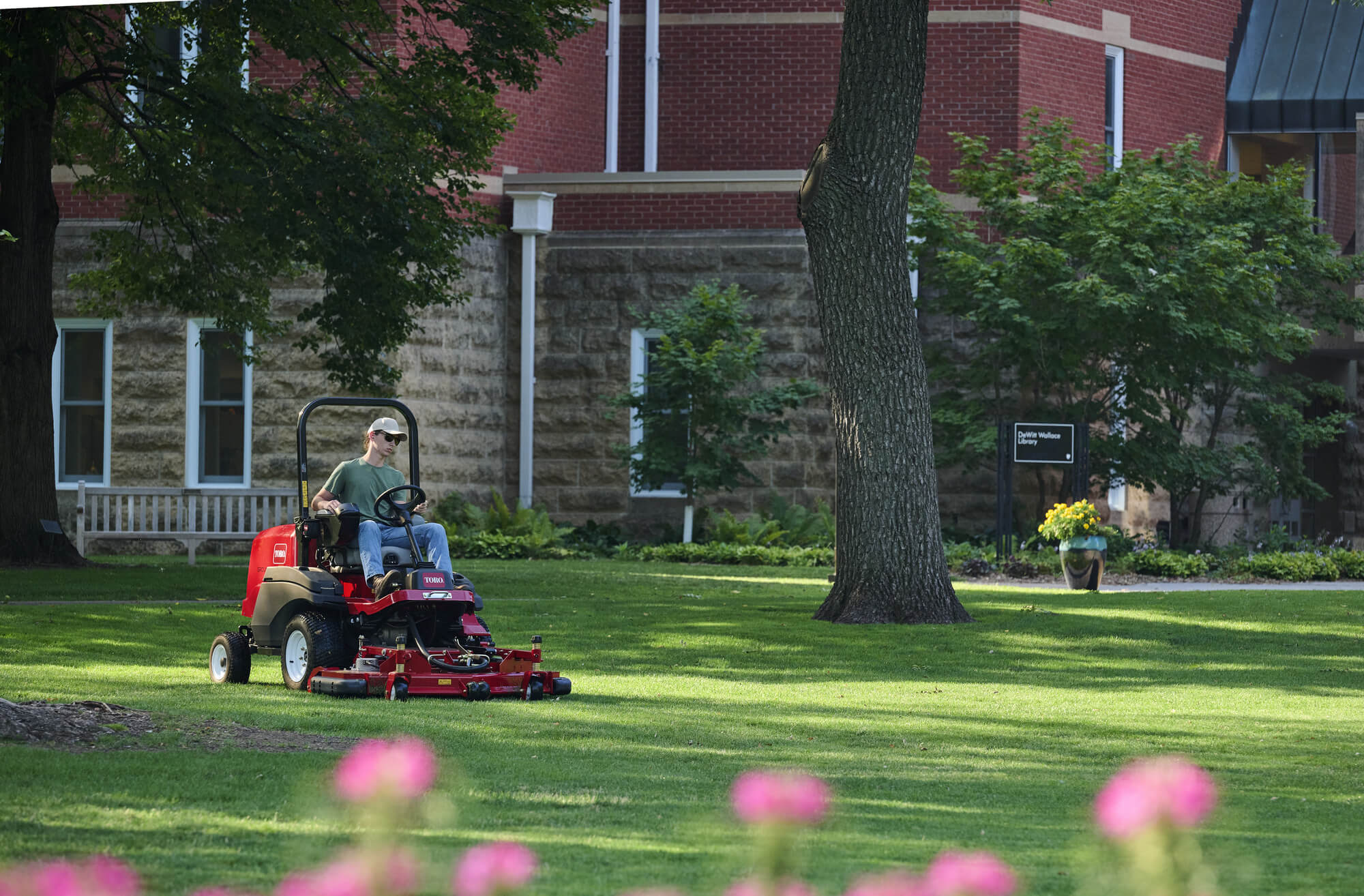
You’ll need to decide whether a rotary mower will give your turf the finish you’re looking for, in terms of its after-cut appearance. Other factors to consider include the ability to create crisp stripes when mowing and different grass clipping management options such as mulching, collection, or simple discharge.
When should I use a rotary mower?
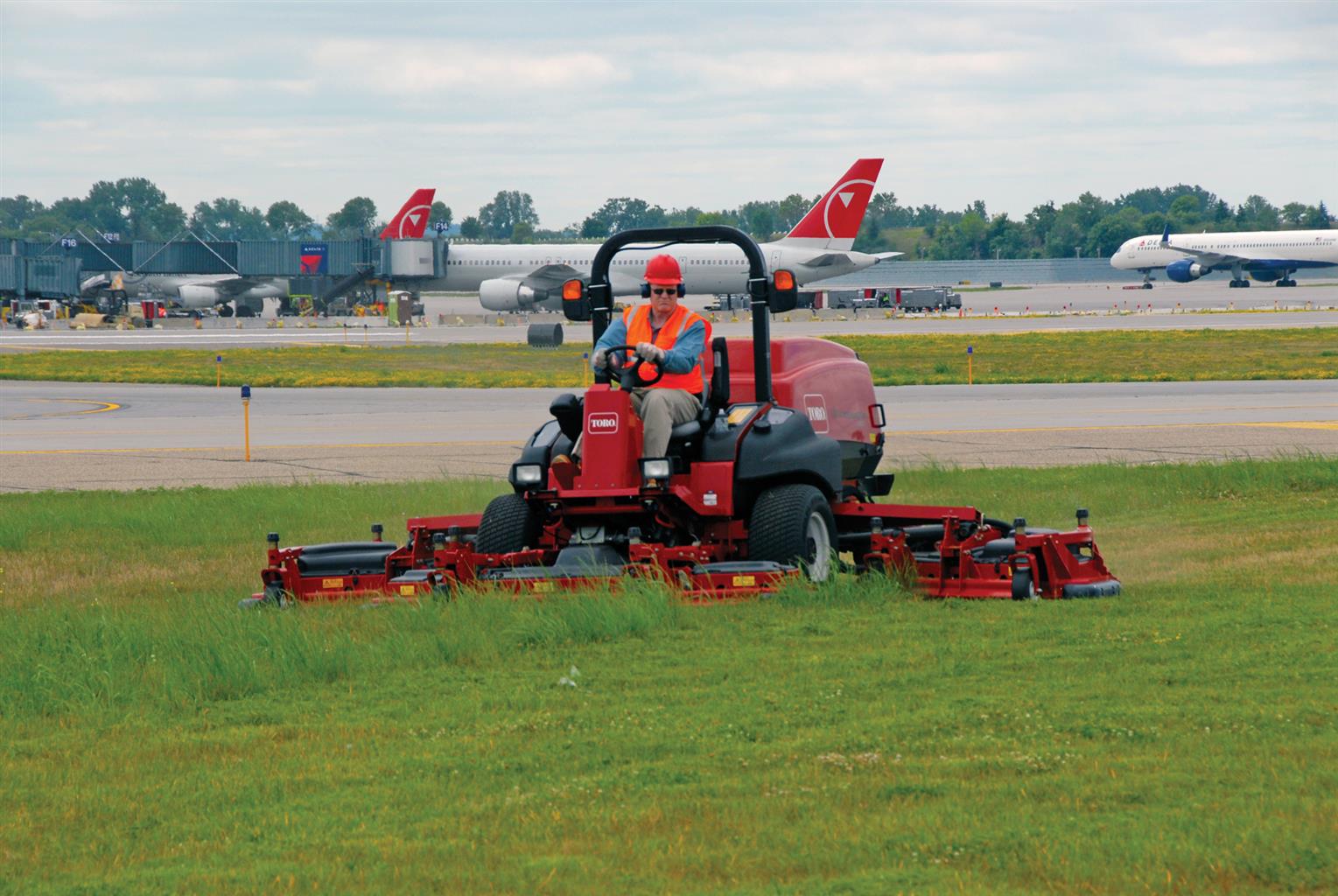
Rotary mowers are the ideal piece of equipment for:
- Maintaining sports pitches and green spaces that don’t require an ultra-low height of cut (HOC)
- Mowing amenity turf in parks, municipal grounds, and large green areas where durability and productivity are key.
- Working on undulating turf or on areas where debris like pebbles, rocks, and twigs might damage more exposed blades of cylinder mowers.
- Tackling demanding, variable conditions, for instance, tall overgrown weeds or coarse, wet grass.
When should I choose a cylinder mower?
Consider an alternative mower if you’re working on:
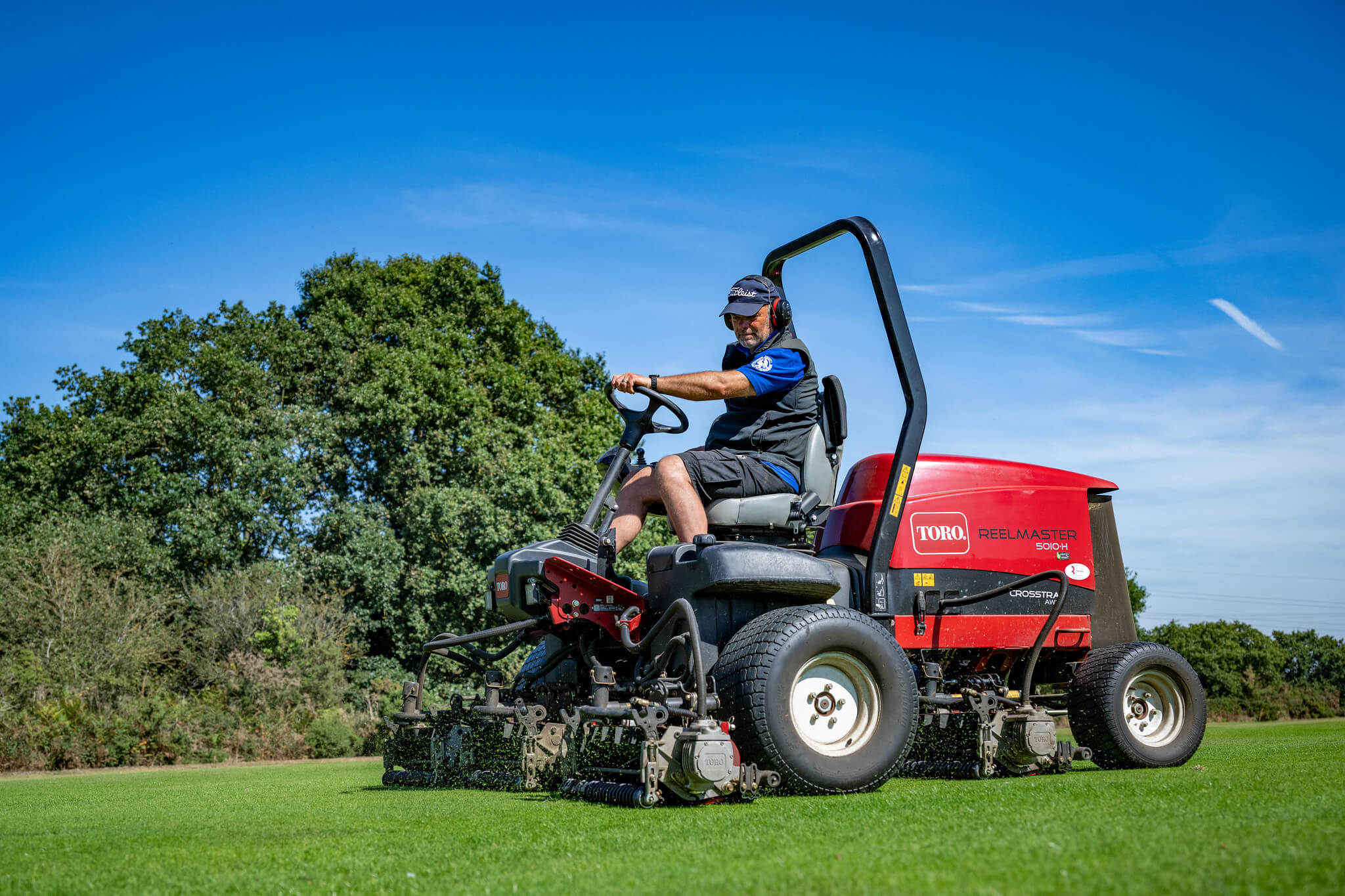
- Ultra-low or short cut heights, where a cylinder mower is still the standard. Cylinder mowers work best on short grass that requires frequent mowing, for example at least once a week during the growing season.
- Turf where presentation lines and precision at very low heights are critical. Here, rotary cut quality may not match the best cylinders. The quality of cut from a cylinder mower is generally finer and the cutting mechanism more precise than that of a rotary mower, when both are maintained correctly, and cylinders minimise the marks of their wheels on the turf, due to rollers at the front and rear.
Rotary mowers vs cylinder mowers
In our in-depth guide to rotary and cylinder mowers, we’ve thoroughly compared these machines based on different turf needs and priorities. Here’s a short summary:
| Pros | Cons | |
| Rotary mowers | More forgiving and sturdy; can manage more uneven surfaces | Cannot achieve lower heights of cut, such as those required for golf greens |
|
|
Can be used to mow longer, overgrown or uneven grass | Delivers a chopped finish rather than a precise, scissor-like cut, offering a higher HOC than cylinder mowers |
|
|
Generally good for grounds: often used for public spaces, verges, roughs, sports pitches, and amenity areas | |
|
Cylinder mowers
|
Scissor-like slicing action against a fixed bottom plate bedknife results in a very fine, championship-level cut | A more sensitively aligned piece of machinery which doesn’t cope well with rough, uneven ground, or longer grass |
|
|
Offers lower HOC that are ideal for golf greens, fairways, or tees | Not suitable for most grounds applications, as they can be more easily damaged by debris, and longer mowing time |
|
|
Depending on model, these mowers can cut as low as 1.5mm without compromising on cutting quality or damaging the turf |
Using rotary mowers to support professional turfcare
The versatility across different turf conditions, simple maintenance, and efficiency in larger green areas of rotary mowers make them essential for professional groundscare. However, they’re not always the right solution for every surface, especially ultra-fine, low-height turf.
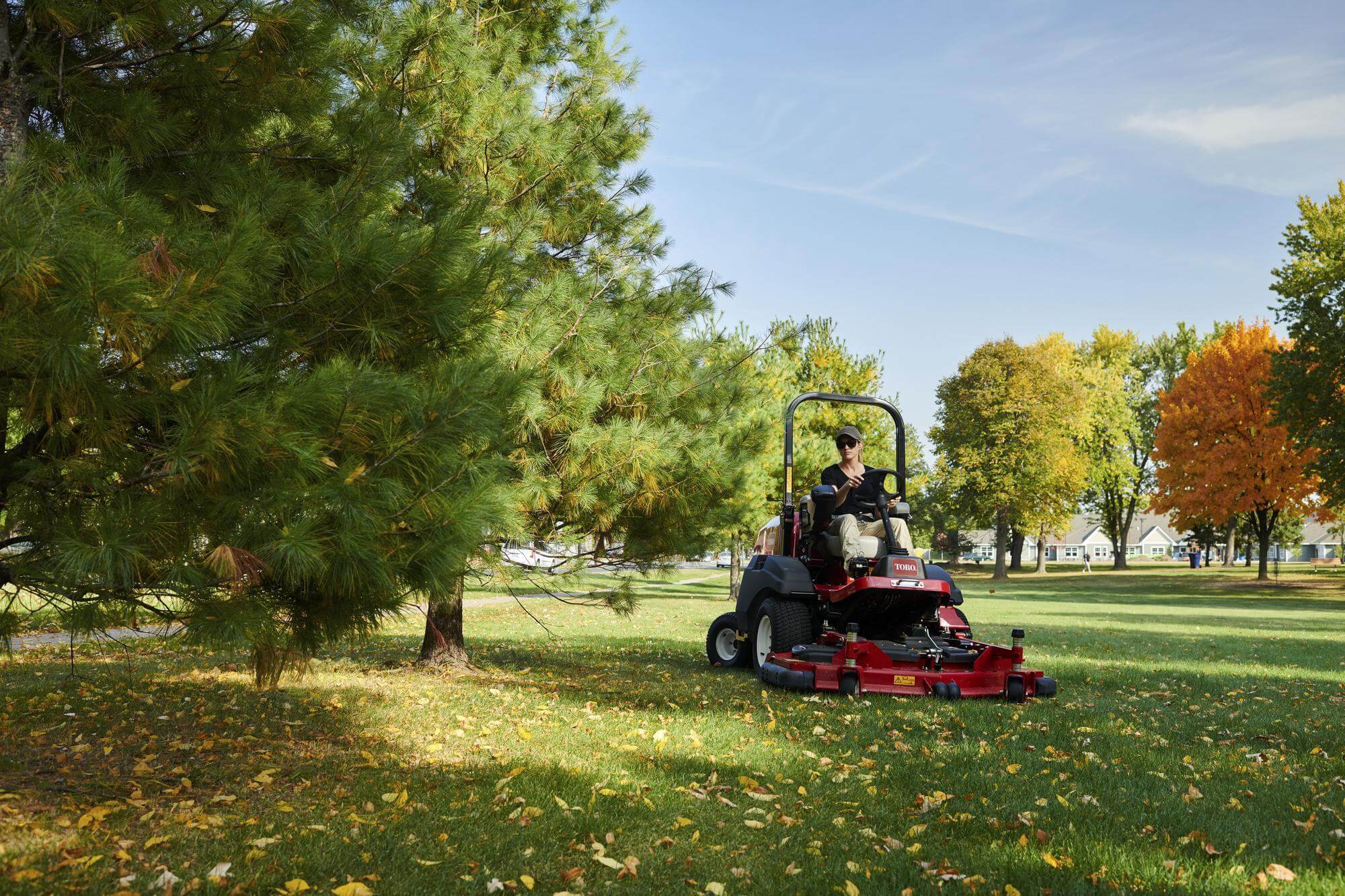
Understanding the role of a rotary mower within your wider fleet allows grounds teams to maintain turf efficiently while ensuring the right tool is used for each task. A balanced fleet provides the flexibility to tackle different surfaces with precision and confidence throughout the year.
To make the most of your equipment, speak with our team about integrating rotary mowers into your existing operations. Discover our full range of commercial mowers at Reesink Turfcare, or get expert guidance from our product specialists by calling 01480 226800.