
Scarifying turf: when to use scarification over aeration
Scarifying turf and aerating the soil are strategies often discussed together in turf maintenance, and for good reason. Both play a critical role in maintaining healthy, high-performing sports surfaces. However, the two practices are not interchangeable.
For greenkeepers and grounds professionals, the key question is not which one is ultimately better, but when to use one over the other. The answer depends on what problem you are trying to solve: whether that’s thatch and moss build-up, surface softness or deeper issues like soil compaction and poor drainage.
Understanding the difference is essential for choosing the right strategy at the right time.
What happens during the scarification process?
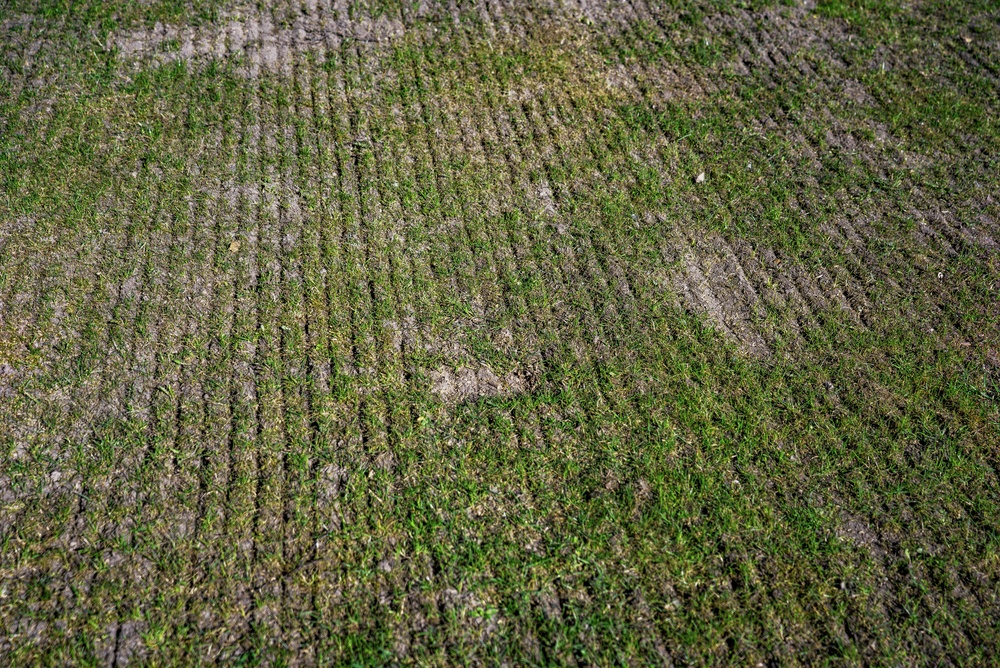
Scarification is a mechanical process that works across the surface layer of the turf, using vertical blades to cut into the sward and remove unwanted material. This includes thatch, moss and excess organic matter.
The goal is to clean out and open up the soil surface, allowing the grass seeds to grow stronger and healthier. By reducing the build-up of organic material, scarification helps:
- Improve the transportation of nutrients within the turf surface
- Encourage strong, healthy grass growth
- Create a cleaner, more consistent playing surface
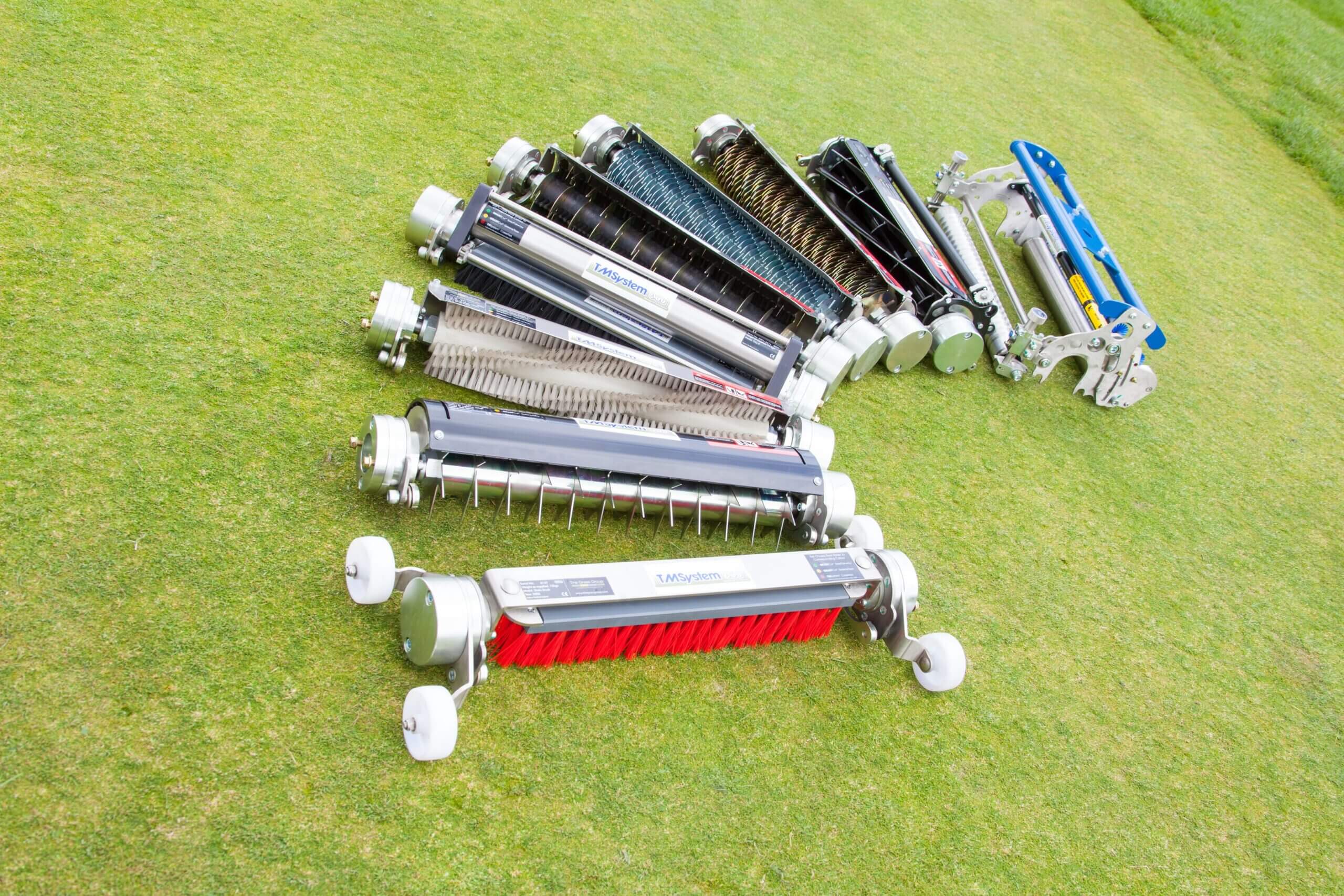
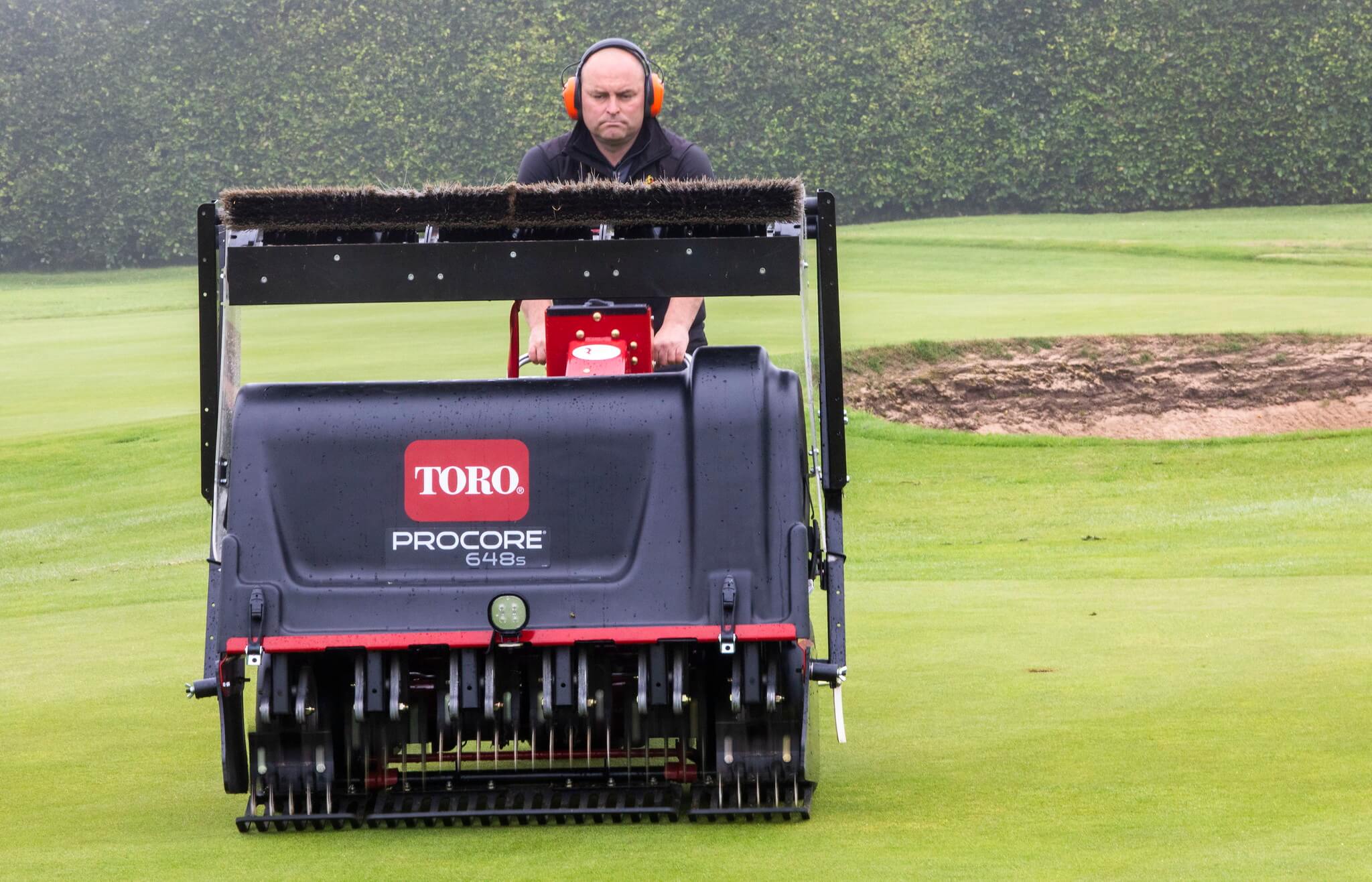
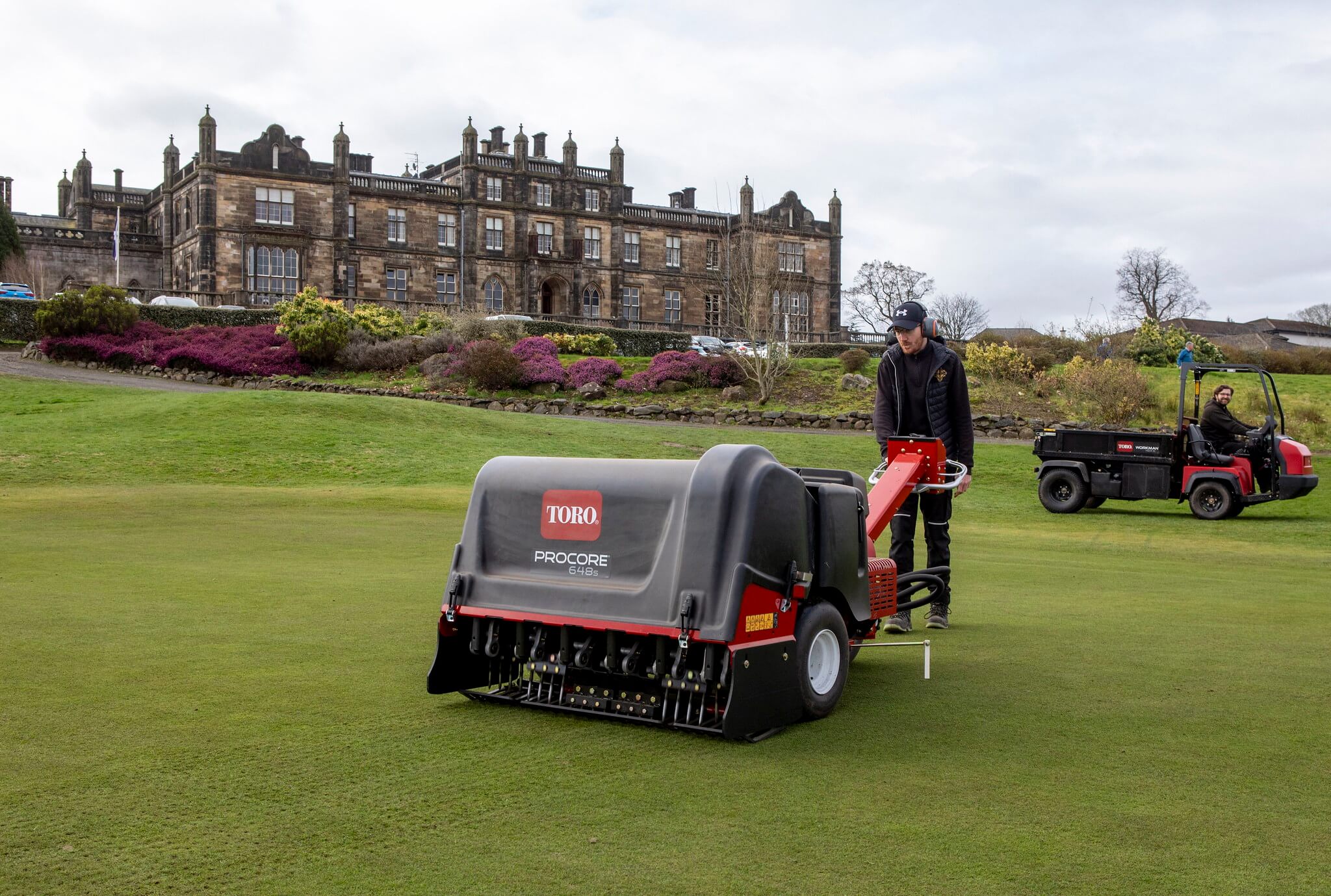
Compared with aeration, scarification focuses more on the upper turf profile. For example, systems like the ATT TM System Scarifier are particularly effective where thatch has accumulated below the immediate surface and needs targeted removal. It is designed to work precisely within working depths up to 14mm while even shallow aerators like the Toro ProCore 648s reach a maximum aeration depth of 10.2cm, affecting the soil at a much deeper level.
When is the best time for scarification?
Scarification is typically carried out during periods of active grass growth, when the turf can recover quickly. For most golf courses and sports pitches in the UK, this means:
- Between late March and early April, occasionally in late spring depending on the weather
- Late summer to early autumn, when renovation works are commonly carried out before winter
It’s important to remember that the temperature of the soil should consistently remain above the 7–10°C range, which is when the grass begins to grow more vigorously.
Practical scarification tips
Successful scarification depends as much on timing and turf conditions as it does on the process itself. To achieve effective thatch removal without placing unnecessary stress on the turf, preparation is key.
Tip #1 – gradually reduce the height of cut
Before scarifying, gradually reduce the height of cut over several mowing cycles rather than lowering it aggressively in a single pass. This helps the scarifier work more effectively through the surface layer while minimising disruption to healthy grass plants.
Tip #2 – balance moisture levels
Moisture levels are equally important: the turf should be moist enough to allow clean penetration into the surface, but not saturated. On the other hand, overly dry conditions can increase stress on the plant and slow recovery, while excessively wet surfaces risk smearing and surface damage.
Tip #3 – carefully select scarification depth
Depth settings should also be matched carefully to the level of thatch present. Light, regular scarification can help keep the turf surface clean throughout the growing season, while deeper, more aggressive work is typically reserved for renovation periods.
Tip #4 – overlap during passes
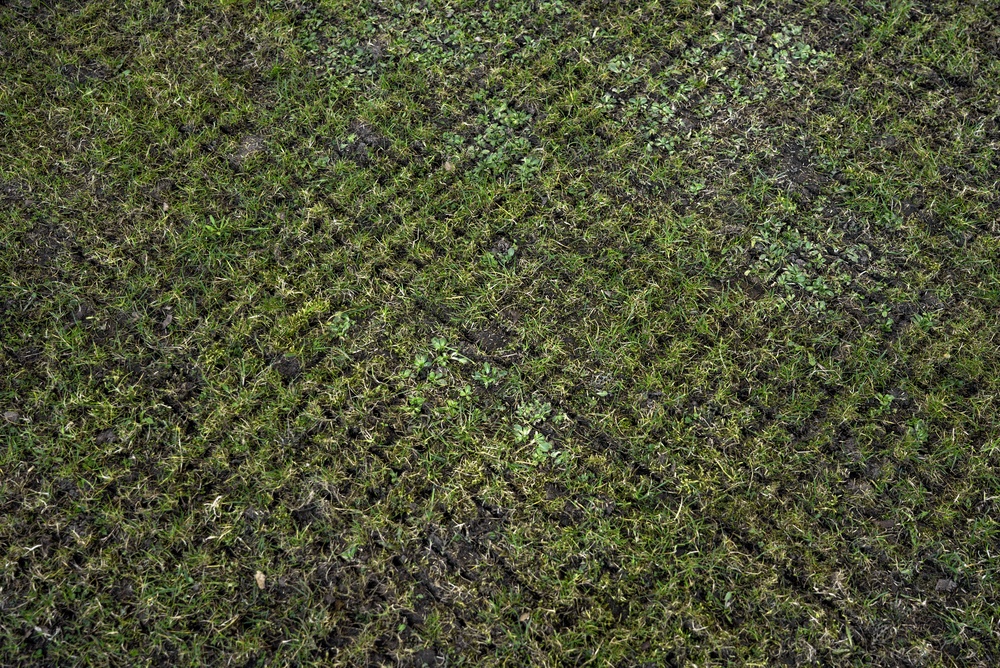
For the best results, operators should work methodically across the surface with slight overlap between passes and add a second pass at a different angle on areas with heavier organic matter accumulation. This kind of cross pattern ensures even coverage and provides a more thorough deep cleanse of the sward.
Tip #5 – remove debris immediately
Finally, all removed material should be collected promptly. Leaving debris on the surface can restrict airflow, reduce light penetration and limit the effectiveness of the overall scarification process.
Removing moss, thatch and more: what problems is scarification solving?
Scarification is most effective when the issue lies in the surface layer of the turf. Over time, organic matter builds up as grass clippings, roots and other material accumulate faster than they can break down. This creates a thatch layer that can smother the turf, impact the circulation of water, air and nutrients and negatively affect the healthy growth of new grass.
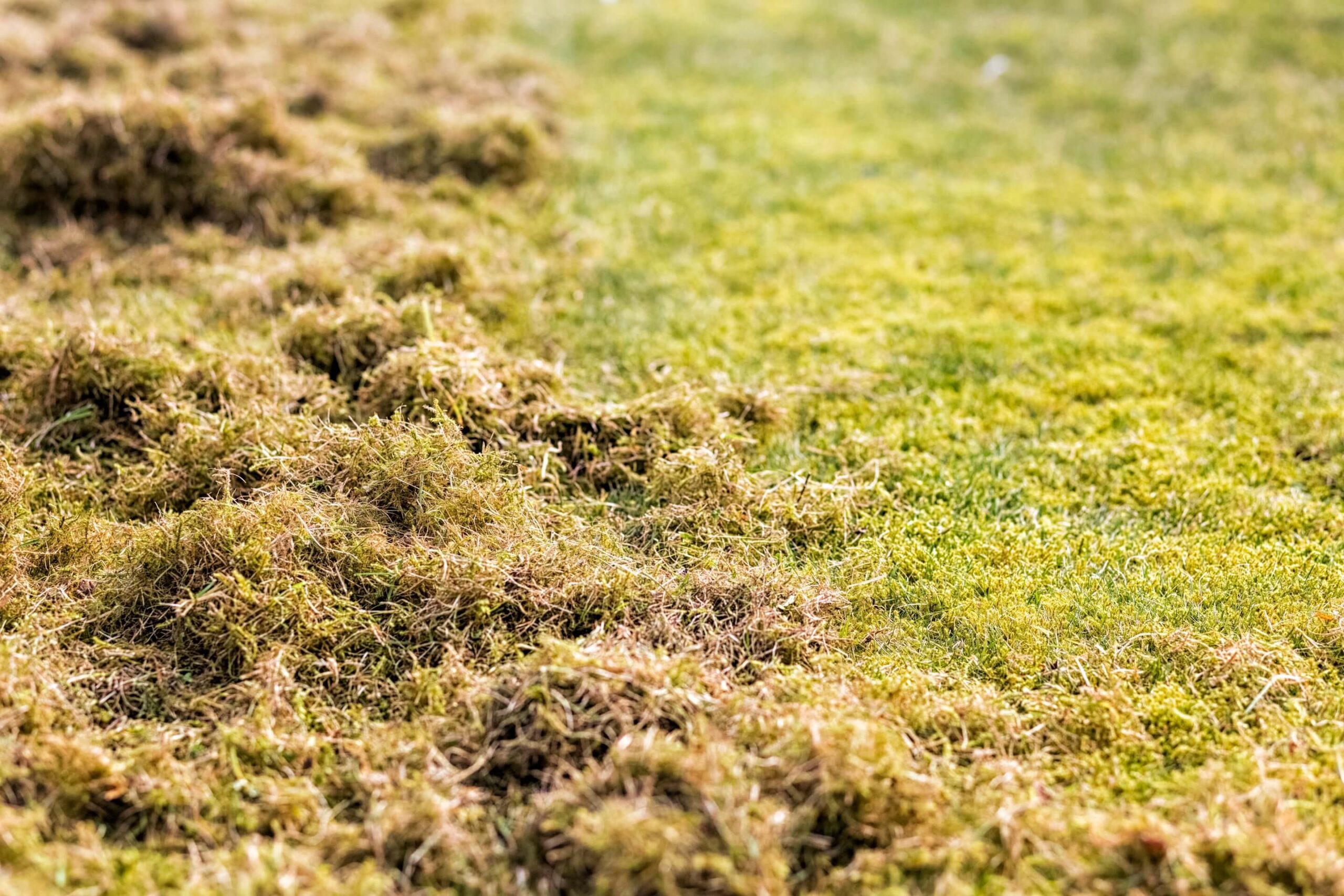
Naturally, certain environments are more prone to these problems. For example, parkland courses characterised by lush rows of trees generate more debris that transforms into thatch, while in shaded or damp areas decomposition of organic matter is slower, which means a higher risk of thatch build-up.
When scarification is needed
Turf professionals may notice:
- A soft, spongy surface feel
- Bare patches of grass where the turf is thinning
- Reduced ball roll quality
- Visible organic layering near the surface
In these situations, the issue is not what’s happening deep in the soil but what’s sitting on top of it.
What is aeration, and when is it the better choice?
Aeration is the process of punching holes into the soil profile – typically using solid or hollow tines – creating channels that promote the circulation of essential nutrients towards the grass roots.
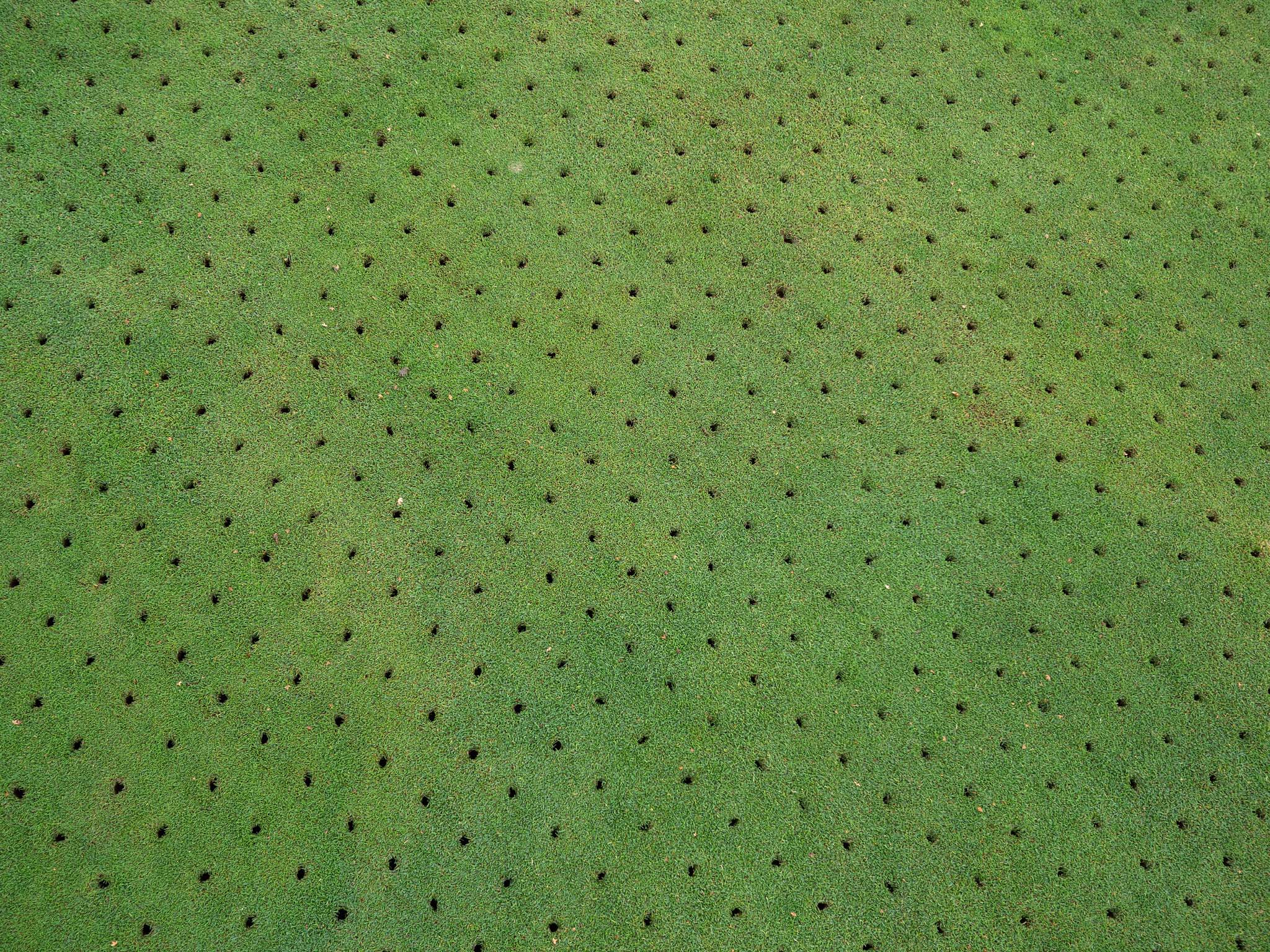
Unlike scarification, the primary goal of aeration is to target the rootzone and soil structure below the surface:
- Relieving soil compaction
- Improving oxygen levels in the rootzone
- Enhancing water infiltration and drainage
- Encouraging deeper, stronger root growth
When aeration is the better option
Aeration should be the first choice when the underlying issue is:
- Compacted soil
- Poor drainage deeper in the profile
- Limited root development
- Restricted air movement below the surface
Check out our in-depth guide for more insights into the benefits of aeration.
When to choose scarification over aeration
In practice, the decision comes down to identifying where the problem sits.
Scarification is the more appropriate intervention when:
- Thatch is the primary issue
- Moss is beginning to spread excessively
- The surface feels soft or “spongy”
- Organic matter is affecting playability
- The goal is to refresh and open up the sward
Aeration, on the other hand, is more suitable to address deeper structural issues.
A simple comparison: scarification vs aeration
| Condition | Scarification | Aeration |
| Thatch build-up | ✔ Best choice | ✖ Limited impact |
| Moss presence | ✔ Effective | ✖ Not targeted |
| Surface softness | ✔ Helps reduce | ✖ Secondary effect |
| Soil compaction | ✖ Not designed for | ✔ Best choice |
| Drainage issues (deep) | ✖ Limited impact | ✔ Effective |
| Root development | ✖ Indirect | ✔ Direct improvement |
How scarification fits into a wider maintenance programme
Alongside scarification, turf programmes often include:
- Overseeding to strengthen the sward. Overseeding introduces new grass plants into worn or weakened areas, helping maintain surface density, improve recovery and enhance overall turf quality. It’s often carried out alongside scarification and aeration, as opening up the sward creates better seed-to-soil contact and encourages successful germination.
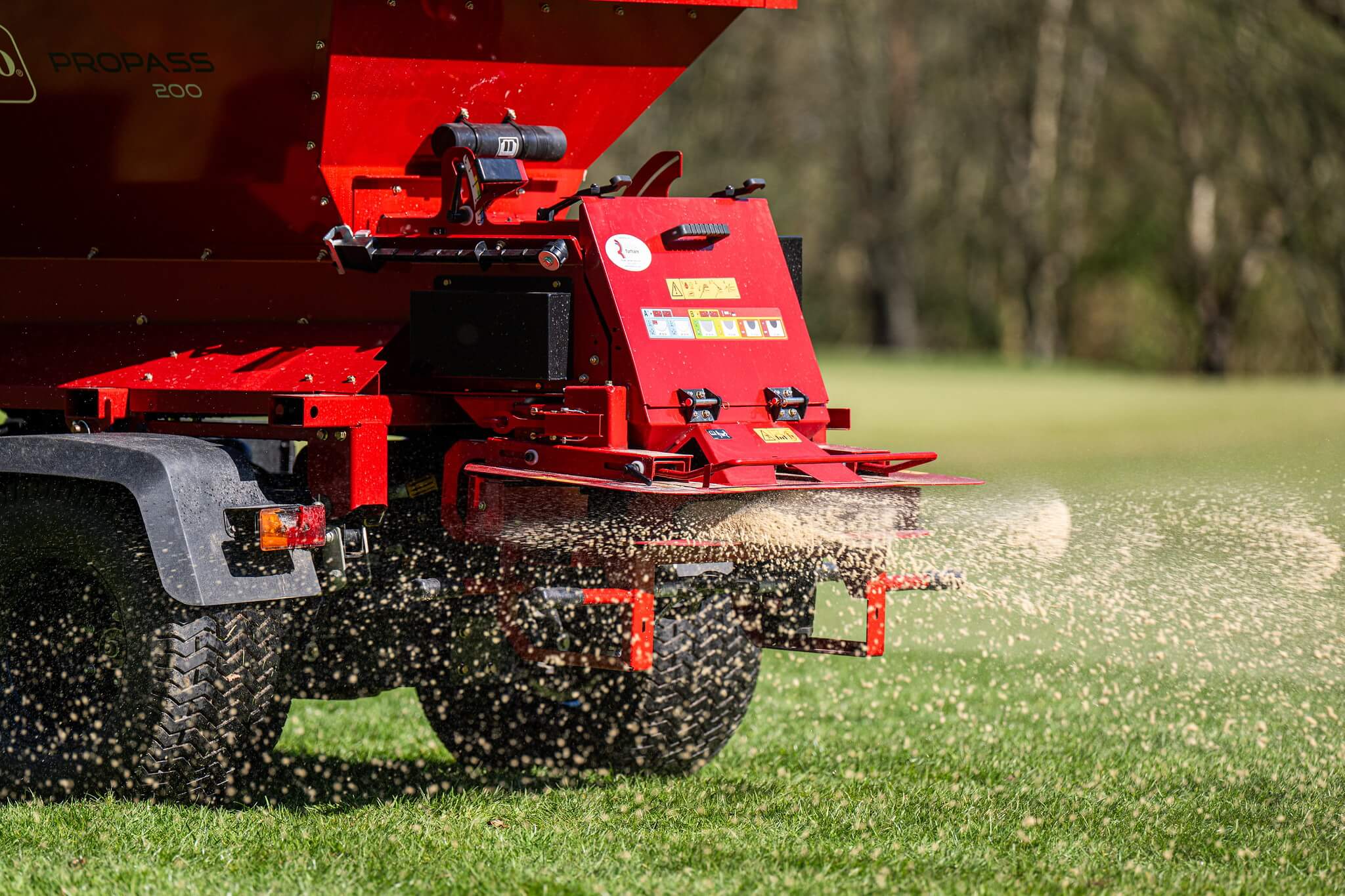
- Topdressing to refine surface levels and aid drainage. Topdressing helps create a smoother, firmer and more consistent playing surface while also supporting moisture management within the upper profile. When integrated with aeration and scarification, it can help dilute organic matter build-up and improve long-term surface performance.
The key is to apply the right intervention at the right time, based on what the turf is telling you.
When used as part of a planned maintenance programme rather than isolated treatments, these practices work together to support healthier grass growth, more consistent playing conditions and stronger long-term turf performance.
Combining thatch removal and efficiency with the right tools
From an operational perspective, flexibility remains critical in modern turf management. Rather than opting for a dedicated scarifier machine, attachments like the ATT TM System Scarifier allow turf managers to convert existing mowing units into multi-functional maintenance tools, helping to:
- Make the most of your existing fleet
- Reduce the need for additional equipment
- Carry out surface maintenance more efficiently
For busy teams managing large areas, this kind of versatility can make a significant difference, not just in terms of overall productivity but also in the way they manage time and resources.
Making the right choice for your turf
Ultimately, scarification and aeration are both essential tools in modern turf management, but they solve different problems. The key consideration to keep in mind are simple:
- Scarification targets the surface, removing thatch, moss and organic build-up
- Aeration targets deeper layers of the soil, relieving compaction and improving rootzone health
In many cases, the most effective strategy is not choosing one over the other, but using both in a complementary way.
Help your turf thrive with the right approach
Managing turf effectively means making informed decisions: not just about timing, but about the tools and techniques you use.
Reesink Turfcare works closely with greenkeepers and turf professionals to support maintenance strategies that deliver consistent, high-quality results. From scarification solutions like the ATT TM System to a wider portfolio of turfcare equipment, the focus is always on helping teams work more efficiently while improving surface performance.
If you’re reviewing your maintenance programme or looking to tackle thatch and surface performance issues, visit reesinkturfcare.co.uk or get expert guidance from our product specialists by calling 01480 226800 to find the right solution for your course or pitch.